
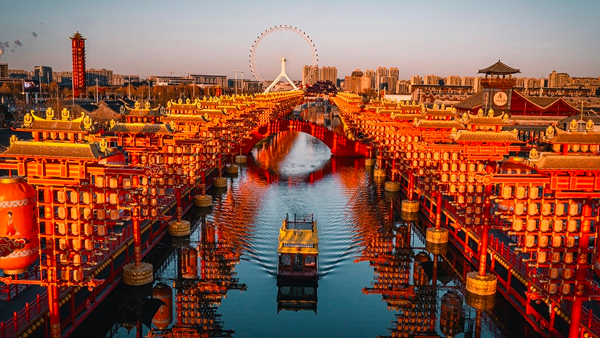
If you’re an English-speaking traveler who loves famous historical buildings, traditional crafts, and the vibrant pulse of living heritage, Hebei is your stage.
If Beijing is the seat of power, then Hebei is its quiet, soulful neighbor — a land where dynasties rose and fell, storytellers still perform in temple courtyards, and artisans continue centuries-old crafts. For travelers seeking cultural tourism, traditional crafts, and famous historical buildings, Hebei offers a journey into China’s living heritage rather than just its history books.1. Hebei’s Living Arts: Folk Performance Traditions
Hebei is one of China’s most culturally expressive provinces, where more than 30 folk-performance genres still thrive. This living art—known collectively as quyi (曲艺)—is a cornerstone of China’s intangible cultural tourism.

You might hear:
- Xihe Dagu (西河大鼓) – Drum ballads that carry centuries of stories.
- Pingshu (评书) – Solo storytelling so captivating it once filled courtyards across
- Zhengding Ancient City, one of China’s largest ancient cities.
- Xiangsheng (相声) – North China’s quick-witted “stand-up comedy,” born from Hebei’s teahouses and street corners.
These art forms are Hebei’s beating heart—performed in parks, temple fairs, and community theaters rather than tourist halls.
If one art defines Hebei, it’s Pingju Opera, a dynamic local opera that grew from market squares into grand theaters. Rooted in everyday emotion, Pingju is the voice of the people.
Its stories come from folk legends and real life—titles like The Widow Ma Opens a Shop, Yang Sanjie Files a Complaint, and Qin Xianglian. The heroines are strong, witty, and just—mirroring Hebei’s instinct for fairness and courage.
Pingju’s early stars, like Xin Fengxia and Xiao Baiyushuang, performed in historical buildings that still stand in Shijiazhuang and Tangshan—living relics of Hebei’s theatrical past.
For travelers exploring cultural tourism, attending a Pingju night in a restored municipal theater is a must. The blend of tradition, costume, and raw emotion tells you more about Hebei’s spirit than any museum wall could.
2. Puning Temple, Chengde: Harmony Carved in Stone
Among Hebei’s famous historical buildings, few places capture its spiritual depth like the Puning Temple in Chengde. Built during the Qing Dynasty, this vast temple complex is a masterpiece of harmony between Han and Tibetan architecture.

The temple’s towering wooden statue of Guanyin — one of the largest in Asia — stands serenely amid prayer flags fluttering in the wind. Walking through its courtyards, you feel the union of faiths and cultures that defined China’s frontier history.
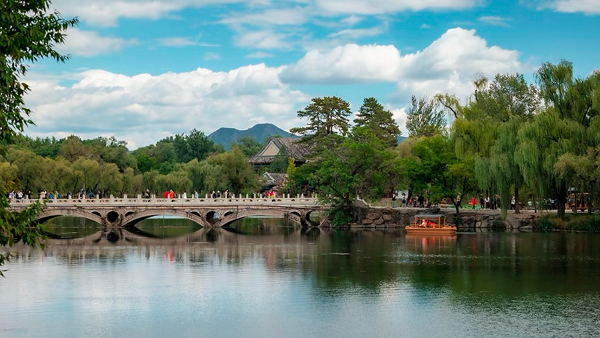
Just beyond, the entire Mountain Resort of Chengde unfolds — once the summer palace of emperors seeking cool northern air. Its temples, bridges, and pagodas mirror the landscapes of every region of the empire, a living map carved in stone.
3. Zhengding Ancient City: Hebei’s Living Time Capsule
Further south, Zhengding Ancient City offers another window into Hebei’s architectural grandeur. Once one of China’s largest ancient cities, it remains beautifully preserved, with centuries-old city walls and Buddhist pagodas rising above quiet alleys.

Stroll along the ancient streets, and you’ll find the Longxing Temple, whose colossal bronze Guanyin statue and delicate carvings date back to the Sui and Tang dynasties. Nearby, local artisans craft woodblock prints, traditional fans, and ceramics — continuing trades passed down through generations.
Zhengding is not a city frozen in time; it’s one that breathes. Locals sip tea under tiled roofs, storytellers perform in temple courtyards, and children ride bicycles over the same stones emperors once walked.
4. The Northern Ceramic Belt: Hebei’s Traditional Crafts
Hebei’s charm also lives in its small workshops and marketplaces. In Cangzhou, blacksmiths still hammer steel into blades known as “Lion City knives.” In Baoding, artisans craft vibrant dough figurines — miniature stories shaped by hand. And in Tangshan, porcelain makers fire gleaming white ceramics that once graced imperial tables.

For those fascinated by traditional crafts, Hebei is heaven. Its northern ceramic belt stretches across four ancient kilns, each representing a distinct artistic philosophy:
- Ding Kiln (定窑) – Renowned for its creamy white glaze and delicate carving, once reserved for imperial courts.
- Xing Kiln (邢窑) – The birthplace of white porcelain, dazzling the Tang Dynasty’s elite.
- Cizhou Kiln (磁州窑) – Bold, black-on-white folk ceramics symbolizing Hebei’s grassroots creativity.
- Tangshan Ceramics – Modern refinement blending traditional artistry with industrial mastery.
Visitors can see live demonstrations of pottery making or purchase handmade ceramics—unique souvenirs of Hebei’s enduring craftsmanship. Many historical buildings in Baoding and Handan showcase these wares in courtyards and galleries.
5. Travel Like a Local: Experience Hebei with Bridge to Locals
To truly understand Hebei, you need more than a guidebook — you need connection.
At Bridge to Locals, we help travelers experience cities like Chengde and Zhengding through genuine local encounters — learning calligraphy from a folk artist, sharing dumplings with a craftsman’s family, or exploring ancient courtyards with someone who grew up there.






Leave a comment
This site is protected by hCaptcha and the hCaptcha Privacy Policy and Terms of Service apply.