
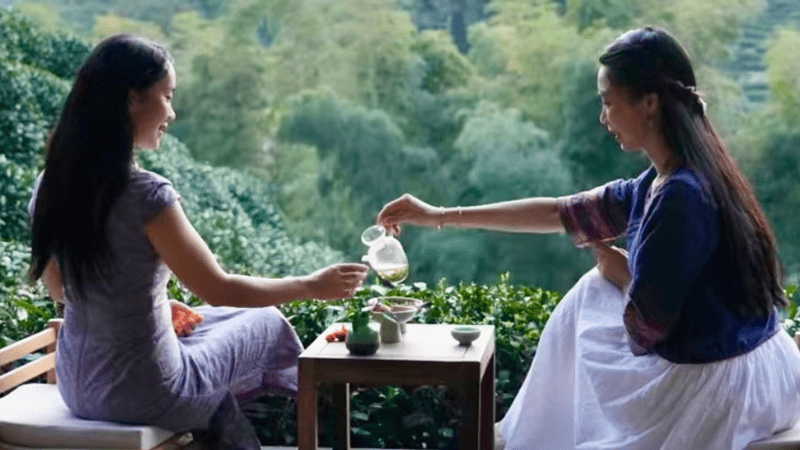
By Sherry Fei | May 2026
If there is one flavor that defines Hangzhou, it is probably not sweetness or spice.
It is the clean, soft, slightly nutty taste of freshly brewed Longjing tea.
Known internationally as Dragon Well tea, this famous green tea has shaped the identity of Hangzhou for centuries. The tea fields surrounding the city are not just agricultural land — they are part of the landscape, the local lifestyle, and even the rhythm of daily life itself.
For many travelers, visiting Longjing Village Hangzhou becomes one of the most peaceful and memorable experiences in China.
And once you step into the hills above West Lake, it becomes easy to understand why.

Source: 小红书@图图在路上
What Is Longjing Tea?
Longjing tea, also called Dragon Well green tea, is one of China’s most famous green teas.
It is known for:
- flat jade-green leaves
- fresh roasted aroma
- soft chestnut-like flavor
- smooth, clean finish
Unlike heavily scented teas, Longjing feels restrained and balanced. It does not overwhelm you. It slowly unfolds.
For first-time visitors to China, it is often surprising how central tea culture still is in daily life:
people carrying tea bottles everywhere, restaurants serving tea before meals, older residents discussing tea harvests with near-scientific seriousness.
In Hangzhou especially, tea is not a luxury object. It is simply part of life.

Source: 小红书@燕麦拿铁
The Origin of Longjing Tea
The origin of Longjing tea is closely tied to Hangzhou and the hills surrounding West Lake.
This area’s climate — humid air, misty mountains, soft rainfall — created ideal conditions for tea cultivation over many centuries.
The most famous variety is:
West Lake Longjing Tea
This refers to tea grown specifically in protected areas around West Lake.
Authentic West Lake Longjing tea is considered premium and can become extremely expensive depending on:
- harvest timing
- tea field location
- leaf quality
- production method
Early spring harvests are especially prized.

Source: 小红书@燕麦拿铁
Longjing Village: The Heart of Hangzhou Tea Culture
What Is Longjing Village?
Longjing Village is a small tea-growing village hidden in the hills southwest of West Lake.
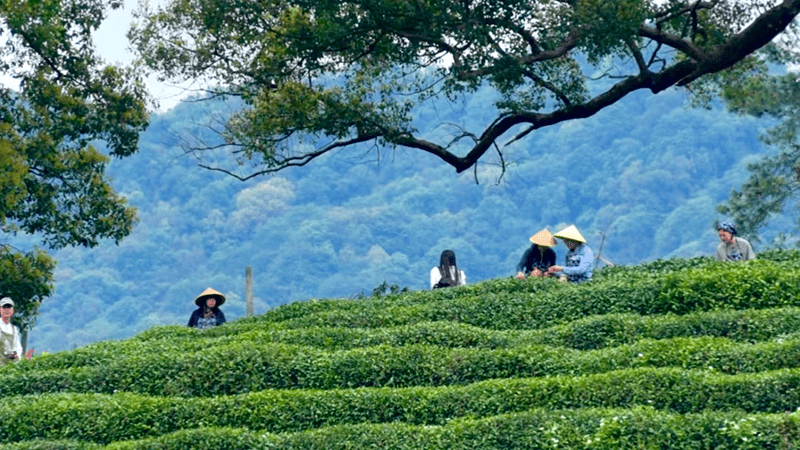
Stone paths wind between traditional houses, tea terraces climb the mountainsides, and the smell of roasting tea sometimes drifts through the air.
For travelers searching:
- Longjing tea plantation Hangzhou
- Longjing tea fields Hangzhou
- Longjing tea village
- Longjing Village Hangzhou
…this is the place they usually mean.

Source: 小红书@Laura.Z_CC®️📸
Walking Through the Longjing Tea Fields
The experience is quieter than many people expect.
There are no giant theme-park entrances or dramatic tourism performances.
Instead:
- narrow mountain roads
- tea terraces layered into hillsides
- small family-run tea houses
- local residents drying tea leaves
- cats sleeping beside bamboo baskets
The beauty comes from atmosphere rather than spectacle.
Spring is especially famous because tea-picking season transforms the hills into a vivid green landscape.

Source: 小红书@图图在路上
Longjing Tea Culture in Everyday Life
Tea culture in Hangzhou is not only about formal ceremonies.
It appears everywhere:
- tea brewed in glass cups at restaurants
- elderly residents carrying tea bottles
- conversations about harvest quality
- tea snacks sold in markets
- cafes reinventing Longjing into modern drinks
This mixture of ancient tradition and modern reinterpretation is part of what makes Hangzhou feel unique.

Source: 小红书@图图在路上
Longjing Tea Benefits
Many travelers search:
- Longjing tea benefits
- Dragon Well tea benefits
- benefits of Longjing tea
Like many green teas, Longjing contains:
- caffeine
- antioxidants
- plant compounds associated with freshness and alertness
People often describe it as:
- refreshing rather than heavy
- energizing without harshness
- clean-tasting and calming
Of course, tea is not magic medicine — but culturally, it is strongly associated with wellness and balance.

Source: 小红书@SUJIAN万塘治茶
Does Longjing Tea Have Caffeine?
Yes.
As a green tea, it naturally contains caffeine, though usually less intensely than coffee.
Many people find the effect gentler and smoother.

Source: 小红书@SUJIAN万塘治茶
Modern Longjing Tea Drinks
Tea culture in China is evolving rapidly.
Besides traditional brewing, you will now also find:
- Longjing milk tea
- Longjing Americanos
- tea cocktails
- tea desserts
- sparkling tea drinks
Hangzhou cafes especially love experimenting with local tea flavors.
This mix of tradition and modern urban culture is part of modern China’s charm.

Source: 小红书@怪乖
What Else to See Near Longjing Village
West Lake
The most famous scenic area in Hangzhou.
Boat rides, willow-lined paths, pagodas, and tea houses create a softer atmosphere than many major Chinese cities.
Nine Creeks Area
A peaceful walking route through streams, bamboo, and forested hills.
Especially beautiful during spring and autumn.
Tea Museums and Tea Houses
Several tea museums and independent tea spaces around Hangzhou offer tastings and introductions to local tea culture.

Source: 小红书@咕噜噜Glu
Longjing Tea and Food
Tea culture naturally connects with food.
Some local dishes include:
- Longjing shrimp
- tea-smoked foods
- tea desserts
- seasonal tea pastries
The tea itself is often treated almost like an ingredient.

Source: 小红书@Lottieeee
Practical Travel Tips for Longjing Village
Transportation Can Be Inconvenient
This is important.
Although beautiful, Longjing Village sits deep in the hills around West Lake.
Public transportation can become crowded and confusing, especially during weekends and holidays.
Taxi access may also become difficult during peak travel times.
Best Seasons to Visit
Spring: Most famous season for tea picking.
Autumn: Cooler weather and beautiful mountain scenery.
Summer: Very green, but often humid.
Wear Comfortable Shoes
The village area involves hills, slopes, and walking paths.

Source: 小红书@秋白
A Simpler Way to Experience Hangzhou Tea Culture
Because Longjing Village is located deep in the mountains on one side of West Lake, transportation can take time and energy — especially for short-term travelers.
If you want to experience Hangzhou tea culture without spending half your day navigating mountain roads, our Hangzhou tea culture experiences Tea varieties in Hangzhou: DIY kombucha, Longjing tea, matcha offer a more relaxed alternative.
Instead of focusing only on tea fields, we explore how tea exists in modern Chinese life:
- traditional tea whisking culture
- kombucha workshops
- Longjing-inspired drinks
- tea spaces locals actually visit
- seasonal tea experiences connected to Hangzhou daily culture
It is less about rushing between tourist spots, and more about understanding why tea still shapes this city today.

Source: 小红书@秋白
Discover More Local China with Bridge to Locals
Tea is only one part of Hangzhou’s culture.
Beyond Longjing Village, China becomes most interesting when experienced through everyday local life: night walks, markets, food streets, temple spaces, cafes, riversides, and conversations.
Explore our local blogs and experiences below across Hangzhou, Shanghai, Beijing, Chengdu, Wuhan, Chongqing and beyond — from tea culture routes and foodie walks to nightlife tours and hidden neighborhood experiences designed for curious travelers who want more than standard sightseeing.
- Beijing Hutong nightlife with local drinking tour
- Beijing Nightlife: Explore vintage movie-themed bars and hutongs
- Yangmeizhu Hutong Old Beijing Culture and Handicraft Tour
- Shanghai Nightlife: TCM Cocktails
- Chinese character meditation experience at Shanghai Jade Buddha Temple
- Hangzhou Food Tour: Local Bazaar and Street Food Walking Tour
- Chinese Food Philosophy in Hangzhou: A Zen Food Journey
- Hangzhou nightlife tour: bars, cocktails, beer and night markets
- Tea varieties in Hangzhou: DIY kombucha, Longjing tea, matcha
- Enjoy Hangzhou like an aristocrat: West Lake cruise, tea tasting, painting
- Wuhan Breakfast Walk: Markets, street food, and specialty coffee
- Chengdu Nightlife: Explore hidden bars with local friends





Leave a comment
This site is protected by hCaptcha and the hCaptcha Privacy Policy and Terms of Service apply.