
By Joanne Sun | October 2026
Shanghai is very good at selling beautiful objects under flattering lights.
This is not that kind of shopping.
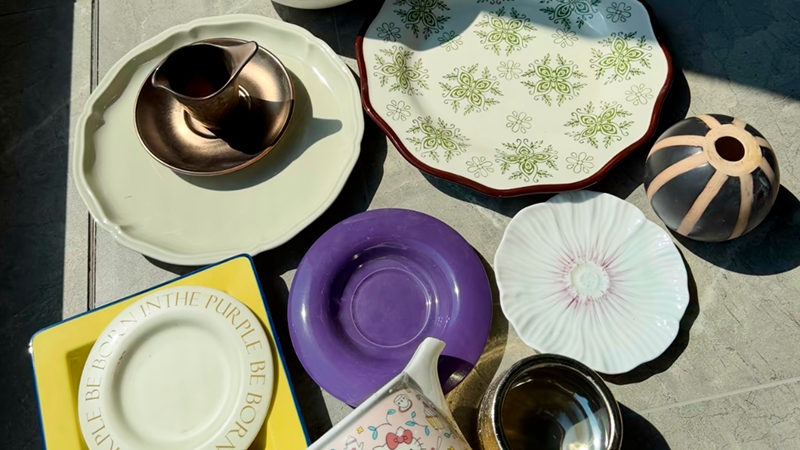
In a warehouse compound in northern Baoshan, visitors have reportedly crouched beside baskets of dusty cups, bowls and vases, checking every rim for chips before paying by weight. The advertised price—¥5 per jin, or roughly ¥10 per kilogram—sounds less like Shanghai luxury retail and more like somebody misplaced a decimal point.
The activity is called 捡瓷 (jiǎn cí), literally “picking ceramics.” Online, it is often translated as “porcelain picking” or “ceramic treasure hunting.” There are no glass cases, matching collections or guarantees. The pleasure lies in looking long enough to find one imperfect thing that feels inexplicably yours.

Source: Dianping @Shinny
But there is an important catch: this is a warehouse business, not a permanent museum attraction. Its address, hours, stock and pricing have circulated mainly through social-media posts and can change without notice.
So, is it one of the most unusual things to do in Shanghai, or a long metro ride in search of a locked door?
Potentially both. Here is how to keep it on the right side of the story.
Shanghai Porcelain Picking: The Quick Answer
- What it is: Searching through factory seconds, surplus stock and unmatched ceramics sold cheaply, often by weight
- Reported price: ¥5 per jin; one jin equals 500 grams
- Reported location: 768 Hulian Road, Baoshan District
- Nearest reported metro: Liuhang Station on Line 7
- Time needed: At least half a day once transport is included
- Best for: Ceramic lovers, bargain hunters, prop stylists and travelers with luggage space
- Not ideal for: Anyone expecting antiques, guaranteed designs, verified food-safe tableware or a polished tourist attraction
- Golden rule: Confirm that it is open before crossing Shanghai

Source: Dianping @李大锤_9934
What Does Jian Ci Mean?
The phrase 捡瓷 (jiǎn cí) means “picking ceramics.” It describes the process well: take a basket, search through mixed stock, inspect each piece and pay for what survives your standards.
The trend is strongly associated with Chinese ceramics-producing regions, particularly Jingdezhen and Liling, where factory seconds, trial pieces and surplus wares can enter discount markets. Shanghai’s reported warehouse brings a similar treasure-hunt format into the city.
Three distinctions matter:
- This is not antique hunting. A dusty bowl is not automatically old, rare or valuable.
- Not every item is necessarily porcelain. Porcelain is a type of high-fired ceramic; mixed warehouse stock may also include stoneware or earthenware.
- The source is not always documented. Do not assume every piece came from Jingdezhen unless the seller can confirm it.
In other words, go looking for a cup you like—not an overlooked imperial relic waiting beneath a pet bowl.

Source: Dianping @李大锤_9934
Why Chinese Porcelain Matters Far Beyond the Warehouse
The bargain hunt makes more sense against the much larger story of Chinese porcelain.
For centuries, Chinese kilns transformed mineral-rich clay and stone into objects that were light, hard, resonant and astonishingly white. Porcelain moved through global trade networks, influenced dining habits and decorative arts, and became so closely associated with its country of origin that “china” became an English word for fine tableware.
Jingdezhen occupies a central place in that history. In 2026, the Jingdezhen Handicraft Porcelain Industry Sites joined UNESCO’s World Heritage List. The listed sites trace porcelain production from the 10th to the 19th centuries, including raw-material extraction, kiln innovation, workshops, trade and the organization of production on an extraordinary scale.
Jingdezhen’s blue-and-white wares became globally prized, but that refined result depended on heat, chemistry and risk. Firing does not always produce perfection. Rims distort. Glazes crawl or spot. Colors shift. Samples never enter full production, and large orders leave surplus behind.
Some imperfect pieces remain entirely usable; others are decorative at best. The warehouse experience begins where the polished retail story ends.

Souce: Dianping @kiiyomi
What Might You Find?
Stock changes with every shipment, so another visitor’s photograph is not a shopping catalogue.
Reported finds have included:
- Teacups, mugs and small handleless cups
- Rice bowls, noodle bowls and serving dishes
- Plates in unmatched patterns
- Vases and planters
- Incense holders and soap dishes
- Pen cups, trays and desk organizers
- Decorative animals and figurines
- Pet bowls
The warehouse has reportedly used low baskets and long tables, with some larger pieces wrapped separately. Expect concrete floors, packaging material and dust rather than gallery labels and helpful spotlights.

Source: Dianping @做个快乐的小女子
Begin at table height to understand the general stock. Only then decide whether your knees feel strongly enough about Chinese ceramics to investigate the floor baskets.
How Much Does ¥5 per Jin Really Cost?
One Chinese jin is 500 grams. At the reported rate:
- 500 grams costs ¥5
- 1 kilogram costs ¥10
- 5 kilograms costs ¥50
- An enormous vase costs whatever the scale says—and possibly an airline excess-baggage fee
The mathematics is simple. Self-control is the advanced course.

Source: Wechat @shanghai look
Before filling a basket, confirm:
- The current price per jin
- Whether the basket weight is deducted
- Whether some pieces are individually priced
- Whether packaging costs extra
- Which payment methods are accepted
Choose a purpose before you shop: one tea cup, a blue-and-white object, a vase for dried flowers or a small gift. Otherwise a ¥5 bargain can become ten kilograms of fragile indecision.

Source: Dianping @遇见你是我最大的幸运
The Seven-Point Ceramic Inspection
Factory seconds range from “tiny cosmetic mark” to “future accident.” Inspect every piece before paying.
1. Hold It Toward the Light
Rotate the object slowly. Look for hairline cracks running through the ceramic body, not only lines in the decoration.
2. Inspect the Rim
Check for chips, sharp glaze points and rough areas. Move your finger carefully; do not discover sharpness by pressing hard.
3. Test the Base
Place the piece on a flat table. If it rocks dramatically, it may not enjoy being a cup.
4. Check Handles and Joints
Look closely where handles, spouts and decorative elements meet the body. Small cracks often hide there.
5. Examine the Interior
Deep cracks, flaking decoration or exposed rough material matter more than a harmless color variation.
6. Smell It
A persistent chemical or musty smell may indicate storage problems or contamination. Put the piece back.
7. Do Not Trust Tapping Alone
A clear ring can sometimes help reveal damage, but it is not a laboratory test. Visual inspection still matters.
Minor glaze variation can give an object character. Structural damage gives it a retirement plan.

Source: Dianping @kiiyomi
What to Bring
- A mask if you are sensitive to dust
- Closed-toe shoes
- Clothes suitable for crouching
- Wet wipes or hand sanitizer
- A reusable bag
- Tissue, bubble wrap or soft packing material
- A translation app
- A power bank for maps and mobile payment
For international travel, wrap pieces separately and place them in the center of a hard-sided suitcase. Fill cups with socks, keep ceramics away from suitcase walls and check your baggage allowance before falling in love with a planter the size of a toddler.
How to Verify the Baoshan Warehouse Before You Go
The original reports give the following information:
- Reported Chinese name: 上海五圆捡瓷宝山仓
- Reported address: 上海市宝山区沪联路768号
- Reported hours: 9:00 a.m.–8:00 p.m.
- Reported directions: Enter the compound, turn right and continue toward the rear
- Nearby transit: Liuhang Station (刘行站), Metro Line 7
Treat every line above as provisional.
On the day before visiting:
- Search the Chinese name on Amap, Dianping and Xiaohongshu.
- Look for posts or reviews from the previous seven days.
- Confirm that recent photographs show the same address.
- Check comments for “closed,” “moved,” “appointment required” or “sold out.”
- If a telephone number appears on a current listing, call or ask your hotel to call.
- Save a backup activity in Baoshan or central Shanghai.
If nothing current appears, do not spend half a day chasing an old viral post. Shanghai contains enough real surprises without manufacturing one at a locked warehouse gate.

Source: Dianping @萌面大婶_1077
Is the Porcelain Hunt Worth It?
Go If You:
- Enjoy flea markets and unpredictable stock
- Can recognize chips and cracks
- Want inexpensive props or decorative objects
- Have room to carry fragile purchases
- Find pleasure in searching rather than simply buying
Skip It If You:
- Want museum-quality Chinese porcelain
- Need certified food-safe tableware
- Expect antiques or valuable collectibles
- Dislike dust, bending and warehouse environments
- Have only one free afternoon in Shanghai
- Cannot confirm that the warehouse is currently operating
For a first-time visitor with limited time, the Bund, Yu Garden and a well-chosen cultural experience deserve priority. The warehouse is an eccentric extra, not Shanghai’s eighth wonder.
From Chinese Porcelain to Chinese Calligraphy Art
Porcelain and Chinese calligraphy art are different disciplines, but they reward a similar kind of attention.
Look closely at a hand-painted porcelain line. Its thickness changes with pressure; its curve records the movement of a brush. Chinese calligraphy does the same more directly. A character is not merely an outline to be filled. It is a sequence—each stroke has direction, rhythm, weight and relationship to empty space.
That is why a Chinese calligraphy generator can only take you so far. A digital tool can preview characters in a calligraphic-looking font or offer visual inspiration. It cannot teach:
- Correct stroke order
- Brush angle and pressure
- The pace of lifting and turning
- Balance between black ink and empty paper
- The meaning or cultural associations of a character
- What your posture and breathing do to the line
This matters especially if you are choosing Chinese characters for permanent artwork or a tattoo. Never trust a generator alone; confirm the wording and context with a fluent, knowledgeable human.
For travelers who want to move from looking at Chinese aesthetics to practicing them, Bridge to Locals offers a Shanghai temple meditation experience on GetYourGuide. Centered around the Jade Buddha Temple, it combines mindful observation with guided Hanzi writing and a slower way of meeting the city.

No previous Chinese or meditation experience is required. The objective is not to manufacture perfect calligraphy on command. It is to remain with one breath, one stroke and one character long enough to notice what speed usually hides.
Two Slow Shanghai Experiences—One Thoughtful Day
The warehouse and the temple should not be confused: one is bargain hunting in Baoshan; the other is a guided cultural and contemplative experience. They are also not next door to each other.
But they make an interesting thematic pair on separate half days:
- Porcelain picking: Train your eye to notice weight, proportion, glaze and imperfection.
- Hanzi meditation: Train your hand and attention through breath, line and the structure of Chinese characters.
One may give you an object to carry home. The other may change the way you look at every sign, menu and temple inscription afterward.
Explore the Shanghai Hanzi meditation experience at the Jade Buddha Temple.
Frequently Asked Questions
What Is Porcelain Picking in China?
Porcelain picking, or jian ci (捡瓷), is the informal activity of searching through low-priced factory seconds, surplus ceramics and unmatched stock. Pieces may be sold individually or by weight.
Is All Chinese Ceramic Ware Porcelain?
No. Porcelain is one category of ceramic, generally fired at high temperatures and made from particular refined materials. Warehouse stock may include porcelain, stoneware and earthenware unless clearly labeled.
Is the ¥5 Porcelain Warehouse in Shanghai Still Open?
Its current operation could not be independently confirmed as of October 18, 2026. The reported address is 768 Hulian Road in Baoshan, but visitors should check very recent Chinese-platform posts before traveling.
Are Factory-Second Ceramics Food-Safe?
Not automatically. A cosmetic defect does not necessarily make a piece unsafe, but an unknown glaze or structural crack can present risks. If food-contact safety cannot be verified, use the piece only for decoration or non-food storage.
Can I Find Antique Chinese Porcelain There?
The activity is promoted as a factory-surplus treasure hunt, not an antique market. Treat the pieces as modern decorative or household goods unless qualified evidence proves otherwise.
Can a Chinese Calligraphy Generator Translate My English Name?
It may suggest characters or create a stylized image, but it cannot reliably judge nuance, cultural associations or whether the result sounds natural. Ask a fluent speaker to verify the wording before using it publicly or permanently.
What Are Some Unusual Cultural Things to Do in Shanghai?
Beyond the major landmarks, travelers can explore Chinese ceramics, join guided writing or meditation activities, visit neighborhood markets and learn traditional arts in small-group settings. Prioritize experiences that include cultural context rather than only a photo opportunity.

Source: Dianping @萌面大婶_1077
Final Thoughts
The Baoshan ceramic warehouse is not ancient, glamorous or reliably convenient. That is part of its charm—and the reason to verify it before leaving your hotel.
Go if you enjoy the search. Inspect every rim. Distrust miraculous antiques. Give uncertain tableware a decorative life, and remember that the cheapest vase in Shanghai becomes rather expensive after an overweight-baggage charge.
Most of all, pay attention.
In a city famous for speed and polished surfaces, a dusty bowl asks you to pause. So does a brush touching paper. The object may be imperfect, the line may tremble and the experience may refuse to become efficient.
That is often where the memory begins.






Leave a comment
This site is protected by hCaptcha and the hCaptcha Privacy Policy and Terms of Service apply.