
By Sherry Fei | February 2026
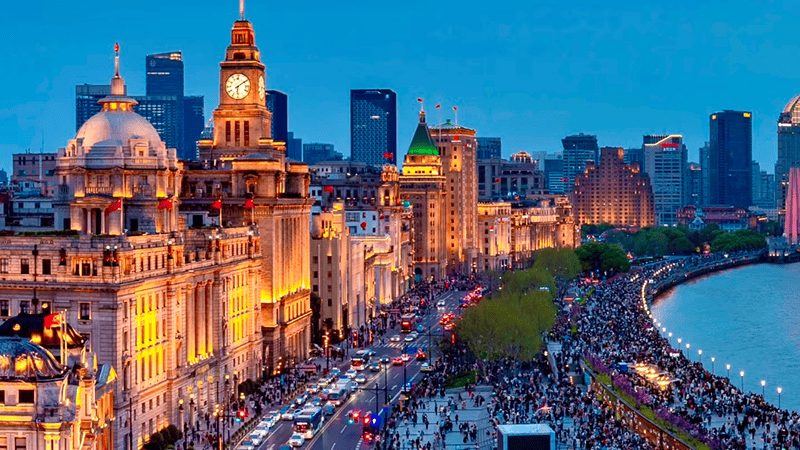
The Bund is Shanghai’s most iconic waterfront promenade, stretching along the western bank of the Huangpu River. For over a century, it has stood as a living archive of the city’s transformation — from treaty-port history to global financial hub.
On one side, monumental buildings from the early 20th century line Zhongshan East Road, forming what is often called an open-air museum of world architecture. On the other, the Huangpu River flows steadily, reflecting the futuristic skyline of Pudong — including the Oriental Pearl Tower, Jin Mao Tower, Shanghai World Financial Center, and Shanghai Tower.
Few places in the world present such a direct visual dialogue between past and future within a single glance.

Source: http://xhslink.com/o/ACPnXTcyJnA
A Brief History of The Bund
Before Shanghai opened to foreign trade in 1843, the Bund area was little more than riverbanks and wetlands. The word “Bund” itself comes from an Indo-European term meaning embankment or riverfront.
Following the opening of Shanghai as a treaty port, foreign banks, trading houses, clubs, and consulates rapidly established themselves along the river. By the early 20th century, the Bund had become the financial and political heart of East Asia, often referred to as the “Wall Street of the Far East.”
Today, these buildings remain — not as relics, but as active landmarks woven into modern Shanghai life.

Source: http://xhslink.com/o/5Cjm5XsrJhO
Architecture Along the Bund: A Walk Through the World
Walking along the Bund is like moving between continents without leaving the city. Gothic, Baroque, Romanesque, Neoclassical, and Art Deco styles appear side by side, each building expressing the ambition of its era.
Several historic buildings are now open to the public through free reservation systems, including former bank headquarters, museums, and heritage halls. Among the most recognizable landmarks is the Peace Hotel, long regarded as a symbol of Shanghai elegance and cosmopolitan life.
This architectural density makes the Bund one of the most distinctive urban streetscapes in Asia.

Source: http://xhslink.com/o/1sDgRnVvMyp
Classic Walking Route: From City Center to the River
People’s Square to Nanjing Road
Many visitors begin their journey at People’s Square, Shanghai’s civic heart. Nearby museums and cultural institutions provide historical context before stepping into the city’s commercial energy.
From here, Nanjing Road leads eastward — one of the world’s busiest pedestrian shopping streets. Old-brand food shops, department stores, and neon-lit storefronts coexist, making it an essential part of the Bund experience.
For a deeper look into this iconic street, you may want to explore our dedicated guide: Nanjing Road.

Source: http://xhslink.com/o/9wxPgDdZssP
Yuyuan Area to The Bund
Continuing south brings you to the Yuyuan and City God Temple area, where classical gardens and traditional markets contrast sharply with the riverfront skyline. From here, walking or cycling to the Bund creates a gradual transition from old Shanghai to modern Shanghai.

Source: http://xhslink.com/o/4hdotCHwQ3N
The Bund Promenade and Waibaidu Bridge
The promenade itself stretches approximately 1.5 kilometers. Highlights include Huangpu Park at the northern end, the Monument to the People’s Heroes, and Waibaidu Bridge — one of Shanghai’s most historic landmarks and a popular photo spot for visitors exploring The Bund. Originally built in 1907 as China’s first all-steel bridge, this camelback truss structure stands at the confluence of Suzhou Creek and the Huangpu River and has witnessed Shanghai’s dramatic transformation over more than a century.
The name “Waibaidu” has an interesting origin that reflects Shanghai’s early urban history. Before bridges existed here, local residents used ferry crossings to get across Suzhou Creek. The ferry nearest the mouth of the creek — closest to the Huangpu River — was known as the “outer ferry”, because it was farther downstream than other crossings. When the municipal authorities built a toll-free bridge at this location, locals began referring to it as the bridge that allowed people to pass “for free.” In Shanghainese and Mandarin, this idea of a free crossing influenced the pronunciation and popular usage of the name “Waibaidu,” which has remained in use ever since.
Today, Waibaidu Bridge is a beloved symbol of Shanghai’s blend of heritage and modernity, and on clear days it makes for an excellent vantage point for skyline photography — especially at dusk, this bridge becomes one of the most atmospheric viewpoints in the city, offering layered perspectives of the Bund, Suzhou Creek, and Pudong beyond.

Source: http://xhslink.com/o/759bdsdsVr0
In-Depth Exploration Route: Hidden Viewpoints and Rooftops
Beyond the main promenade, the Bund area rewards slow exploration. Side streets and elevated terraces reveal unexpected angles of the skyline, often less crowded than the main riverfront.
Several historic buildings now host rooftop spaces and viewing terraces that unlock unique perspectives of the Oriental Pearl Tower and Lujiazui skyline. These viewpoints are especially popular at sunset, when the city transitions from daylight to neon.
For travelers interested in discovering Shanghai after dark, this is the perfect moment to extend the experience beyond sightseeing.
If you’d like to explore Shanghai’s nightlife with locals — including hidden bars and cultural rituals — consider joining: Authentic Shanghai Nightlife Experience: Secret Bars & Traditional Chinese Divination
You can also read more about the city’s nighttime culture here: Shanghai Nightlife: Hidden Bars & Rooftop Secrets

Source: http://xhslink.com/o/4YWEJysctxc
The Bund at Night: Shanghai’s Most Iconic View
The Bund at night is not simply illuminated — it is choreographed. Historic façades glow in warm tones, while across the river, Pudong’s towers pulse with changing lights.
The ideal viewing time is around 30 to 40 minutes after sunset, when both architectural lighting and sky color are balanced. Compared to other popular viewpoints, areas near Waibaidu Bridge and northern sections of the promenade are often less congested.
For detailed night-view recommendations, see Shanghai Skyline at Night: My Tried-and-Tested Viewpoints.

Source: http://xhslink.com/o/3MNwtQIs7Lb
Huangpu River Cruise: Seeing the Bund from the Water
A Huangpu River cruise offers a different rhythm. As boats glide between the Bund and Pudong, the city unfolds in layers — colonial façades on one side, modern megastructures on the other.
Cruises typically operate from late morning through evening, with departures approximately every 30 minutes depending on demand and weather. Night cruises are particularly popular, offering uninterrupted views of Shanghai’s illuminated skyline.
This experience complements walking routes, allowing visitors to understand the Bund as part of a larger urban panorama.

Source: http://xhslink.com/o/41DHacNhbjK
Food, Streets, and Local Life Around the Bund
While the Bund itself is monumental, its surrounding streets reveal everyday Shanghai. Nanjing Road remains a food destination, especially for traditional pastry shops, long-established restaurants, and specialty food stores.
Exploring nearby neighborhoods with a local offers insight into daily life beyond landmarks. If you prefer a slower, more personal experience, you may enjoy: Explore & Live a Shanghai Neighborhood with a Local Resident
For those interested in traditional leisure culture, Shanghai’s mahjong houses and social games remain an important part of local life: Traditional Mahjong Experience in Shanghai – Learn the Game, Feel the Culture

Source: http://xhslink.com/o/6TJboFWfclK
Practical Tips for Visiting The Bund
- Expect strong river winds, especially after sunset
- Wear comfortable shoes for long walks
- Keep personal belongings secure during peak hours
- Bring a power bank if using phones often
- Consider weekday visits for a calmer experience
The Bund is open year-round and accessible at all hours, though early mornings and evenings offer the most pleasant atmosphere.
The Bund as Shanghai’s Living Stage
The Bund is not a single attraction — it is Shanghai in condensed form. History and ambition, stillness and movement, intimacy and scale all coexist along this riverbank.
Whether you walk its length in silence, photograph it at night, or explore its surrounding streets with locals, the Bund remains one of the most complete introductions to the spirit of Shanghai.
If you wish to explore more sides of the city, you can browse our curated Shanghai experiences here.






Leave a comment
This site is protected by hCaptcha and the hCaptcha Privacy Policy and Terms of Service apply.