
By Sherry Fei | July 2026
For many travelers, the Forbidden City is the one place in Beijing that feels impossible to skip. It is not just one of the top Beijing tourist attractions; it is the former heart of imperial China, a vast Chinese imperial palace where emperors lived, ruled, performed rituals, received officials and shaped history for nearly five centuries.
But before you start thinking about red walls, golden roofs and palace courtyards, there is one practical thing to get right: Forbidden City tickets. The Palace Museum does not sell same-day tickets, and high-season dates can disappear quickly. If your Beijing travel guide has only one warning, it should be this: book early, book through official channels, and plan your route before you enter.

Source: 小红书@小小影月
Forbidden City Tickets: The Essential Booking Guide
For travelers searching forbidden city tickets, forbidden city ticket, or forbidden city beijing tickets, the official rule is clear: visitors should book in advance through the Palace Museum’s official website or official WeChat mini program, and the museum warns against buying inflated third-party tickets. Tickets are released from 20:00 Beijing time, seven days before the visit date.
For anyone searching forbidden city ticket price 2025 or forbidden city ticket price 2025 cny, the standard official ticket price is CNY 60 during peak season from April 1 to October 31, and CNY 40 during low season from November 1 to March 31. The Treasure Gallery and Gallery of Clocks each cost CNY 10 extra.
The museum is closed on Mondays except statutory holidays. Official Beijing visitor information lists admission from 8:30, with last admission at 16:10 in peak season and 15:30 in low season. Always check the official page before visiting, because major holidays, security controls and special exhibitions can affect the experience.
You must bring the original valid ID used for booking. For most foreign travelers, that means your passport. Entry is through the Meridian Gate on the south side, and visitors exit through the Gate of Divine Prowess in the north or the East Prosperity Gate.

Source: 小红书@小小影月
Why the Forbidden City Still Matters
The Forbidden City, now home to the Palace Museum, was the imperial palace of the Ming and Qing dynasties. It was completed in 1420 and later served 24 emperors. Today, it is one of the most important Beijing historical sites and one of the world’s largest and best-preserved palace complexes.
Its scale is difficult to understand until you stand inside it. The Palace Museum covers more than one million square meters and preserves around 9,000 architectural bays. Its collection contains more than 1.86 million pieces across categories such as painting, calligraphy, ceramics, sculpture, timepieces and imperial decorative arts.
The Forbidden City is also part of the UNESCO World Heritage site known as the Imperial Palaces of the Ming and Qing Dynasties in Beijing and Shenyang. UNESCO describes the Forbidden City as a seat of supreme power for more than five centuries and a priceless testimony to Chinese civilization.

Source: 小红书@小小影月
How to Read a Forbidden City Map
A good Forbidden City map is not just useful; it changes the whole visit. The palace is built around a strict south-to-north axis. You enter from the south, move through the ceremonial Outer Court, continue into the more private Inner Court, then exit in the north.
The Outer Court was used for grand rituals and state ceremonies. Its key buildings include the Hall of Supreme Harmony, Hall of Central Harmony and Hall of Preserving Harmony. The Inner Court was closer to imperial family life and daily rule, with spaces such as the Palace of Heavenly Purity, Hall of Union, Palace of Earthly Tranquility, and the Eastern and Western Palaces.
Before entering, save a map on your phone and choose one clear route. The Forbidden City is not a place where you should “see everything.” It is better to see fewer places well than rush through dozens of courtyards without understanding them.

Source: 小红书@Cathy
Three Easy Forbidden City Routes
Route One: First-Time Express Route
Choose this if you have two to three hours.
Start at the Meridian Gate, then follow the central axis through the Hall of Supreme Harmony, Hall of Central Harmony, Hall of Preserving Harmony, Palace of Heavenly Purity and Imperial Garden. If you have time, add the Treasure Gallery before exiting through the Gate of Divine Prowess.
This route gives you the classic Forbidden City architecture and the most important imperial spaces without overcomplicating the day.
Route Two: Deep Culture Route
Choose this if you have four to five hours.
Begin at the Meridian Gate, then visit the Hall of Martial Valor if open, the Three Great Halls, the Western Palaces, the Palace of Compassion and Tranquility area, the Palace of Heavenly Purity, the Eastern Palaces, the Treasure Gallery and the Gallery of Clocks. Exit through the Gate of Divine Prowess.
This is the best route for travelers who care about Forbidden City history, imperial life and museum collections.
Route Three: Photography Route
Choose this if you want atmosphere and photos.
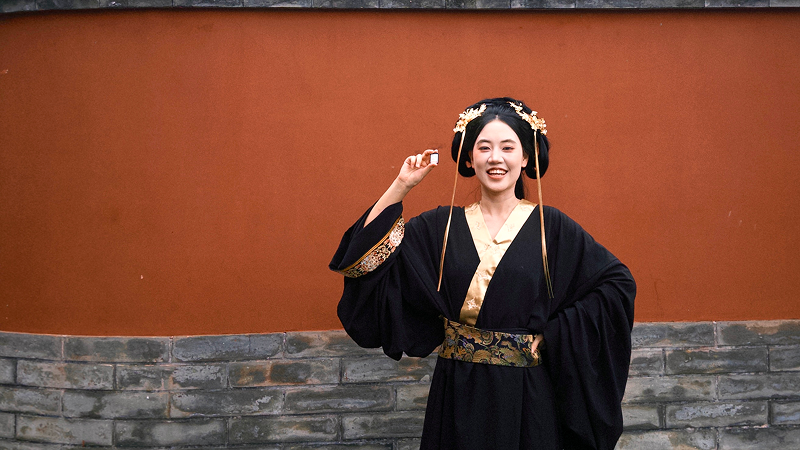
Focus on the long red-wall corridors, the Palace of Prolonging Happiness, the Nine-Dragon Screen, the Corner Towers, the Imperial Garden and the north-side red walls near the exit. The best light is usually early morning or late afternoon. Pure-color clothing photographs well against the red walls, but avoid blocking traffic or photographing restricted exhibition areas.

Source: 小红书@Cathy
What to See Inside the Forbidden City
The Hall of Supreme Harmony is the largest and most dramatic ceremonial hall. This is where imperial power feels most visible: wide stone terraces, carved dragons, giant courtyards and an overwhelming sense of symmetry.
The Treasure Gallery is worth the extra ticket if you enjoy imperial objects, jewelry, ritual vessels and fine decorative arts. The Gallery of Clocks is especially interesting for visitors who like mechanical design; Qing court timepieces show how global exchange entered the palace through gifts, trade and diplomacy.
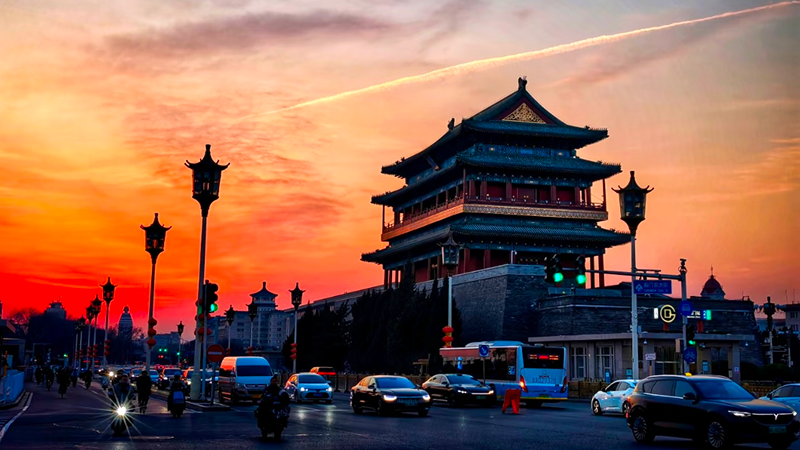
The East Long Corridor and red-wall lanes are quieter and more cinematic than the central axis. The Corner Towers are among the most beautiful parts of Forbidden City architecture, especially from outside the palace moat near sunset.

Source: 小红书@Cathy
How to Get There Without Wasting Time
The Forbidden City is close to Tiananmen, but security lines around that area can be slow during busy periods. A smoother approach is to take Metro Line 8 to Jinyu Hutong Station, walk toward the East Prosperity Gate area, then follow the palace moat toward the Meridian Gate entrance.
Another option is Metro Line 1 to Tiananmen East, then walking through the surrounding cultural area if access is open that day. Stay flexible: central Beijing traffic, security checks and crowd-control rules can change quickly.
After exiting from the Gate of Divine Prowess, cross to Jingshan Park if you still have energy. The hilltop view over the Forbidden City is one of the best things to do in Beijing after a palace visit.

Source: 小红书@Cathy
Practical Tips for Visitors
Wear comfortable shoes. A serious Forbidden City visit can easily become a 20,000-step day. Bring water, sunscreen and a power bank. Shared charging options inside are limited, and you will use your phone constantly for maps, translation and tickets.
Smoking is prohibited throughout the Palace Museum, and flash photography and tripods are not allowed in exhibition halls. Visitors should also follow photography restrictions in specific galleries and shops.
Avoid large luggage if possible. If you are visiting on your arrival or departure day, check the latest luggage storage rules before going. The palace is much more enjoyable when your hands are free.
For food, eat before or after the visit rather than relying on a full meal inside. Nearby options include Wangfujing, Qianmen, Dashilan, hutong cafes, or a relaxed dinner near Shichahai after your Jingshan viewpoint stop.

Source: 小红书@小小影月
A Quick Note: There Is More Than One “Palace Museum”
When foreign travelers say “Forbidden City,” they usually mean the Palace Museum in Beijing. But several other places are connected to the same larger story.
The Shenyang Imperial Palace is also part of the UNESCO-listed Imperial Palaces of the Ming and Qing Dynasties. It reflects early Qing history and Manchu imperial culture. The National Palace Museum in Taipei preserves a major collection of Chinese imperial art, while the Hong Kong Palace Museum presents treasures from the Beijing Palace Museum through modern exhibitions and global curatorial design.
For most first-time visitors, Beijing is still the essential starting point. It is the real imperial center, the architectural original, and one of the most powerful places to understand Chinese history through space.

Source: 小红书@Ambre
See Beijing with Bridge to Locals
The Forbidden City gives you the grand version of Beijing, but the city becomes more meaningful when someone local helps you connect the palace to everyday life. Why does the central axis matter? What did ordinary people imagine behind the red walls? Where should you eat after exiting the north gate? How do you turn a famous landmark into a real conversation? This is the place where the old capital becomes real. Walk slowly. Look up at the roofs. Step away from the crowd when you can. The palace is not only a monument; it is a city inside a city.
Bridge to Locals connects international travelers with local companions rather than conventional tour guides. In Beijing, that could mean a Forbidden City and Jingshan route, a hutong walk, a food experience after the palace, a night route along Chang’an Avenue, or a slower cultural day built around your interests.
On the Bridge to Locals website, travelers can also explore related blogs and experiences below such as Beijing City Walks, China Night Markets Guide, Mahjong Experience, Temple Meditation Experience, Dragon Boat Festival Guide, Cherry Blossoms in China, Shanghai City Walks, Chengdu Nightlife Walk, and local food routes for visitors who want more than standard sightseeing.
- Beijing Hutong nightlife with local drinking tour
- Beijing Nightlife: Explore vintage movie-themed bars and hutongs
- Yangmeizhu Hutong Old Beijing Culture and Handicraft Tour
- Shanghai Nightlife: TCM Cocktails
- Chinese character meditation experience at Shanghai Jade Buddha Temple
- Hangzhou Food Tour: Local Bazaar and Street Food Walking Tour
- Chinese Food Philosophy in Hangzhou: A Zen Food Journey
- Hangzhou nightlife tour: bars, cocktails, beer and night markets
- Tea varieties in Hangzhou: DIY kombucha, Longjing tea, matcha
- Enjoy Hangzhou like an aristocrat: West Lake cruise, tea tasting, painting
- Wuhan Breakfast Walk: Markets, street food, and specialty coffee
- Chengdu Nightlife: Explore hidden bars with local friends





Leave a comment
This site is protected by hCaptcha and the hCaptcha Privacy Policy and Terms of Service apply.