
By Sherry Fei | May 2026
If you opened Chinese social media recently, you probably saw it already:
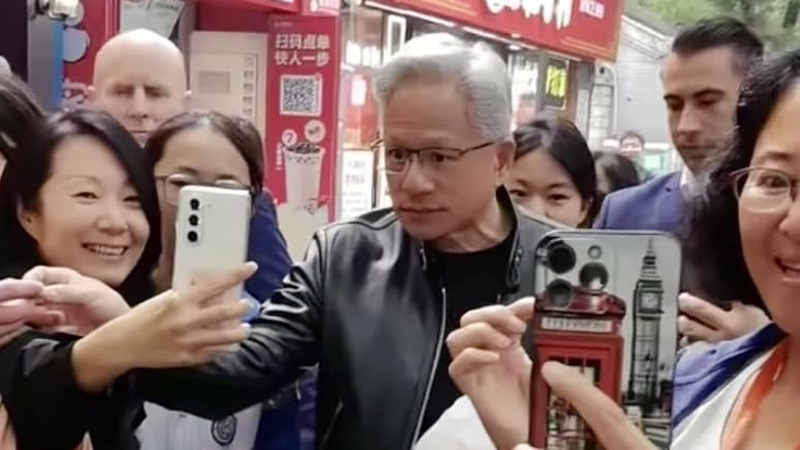
Jensen Huang wandering through Beijing like a tourist on his first weekend in the city.
Not a luxury banquet.
Not some ultra-private business dinner.
Instead?
Beijing yogurt in a tiny alley shop. Zhajiangmian eaten standing outside. Douzhi handed to him by laughing aunties. Cheap milk tea. Hutong bars. Steamed buns from an old neighborhood bakery.
Honestly, it was one of the most unexpectedly charming “Jensen Huang China” moments we’ve seen online in years.
At first, we planned to simply collect information and write a quick guide about the viral route. But then we thought:
Why not just go ourselves?
So one Saturday, Bridge to Locals followed the exact Beijing food trail through Gulou, Nanluoguxiang, and Shichahai — retracing the now-famous Jensen Huang China citywalk stop by stop.
And somewhere between the fermented mung bean drink and the hutong whiskey sour, the route turned into something much more interesting than celebrity sightseeing.
It became one of the most unexpectedly human Beijing food experiences we’ve had in a long time.

Source: 小红书@丫丫爱唱歌
Why Everyone in Beijing Is Talking About Jensen Huang
Part of the reason this story exploded online is simple: people did not expect one of the world’s most recognizable tech CEOs to casually wander through ordinary Beijing neighborhoods eating street food.
But the bigger reason?
He approached Beijing like locals do.
Not through luxury hotels or private dining rooms, but through crowded alleys, tiny snack shops, neighborhood restaurants, and spontaneous conversations.
That’s also why this route works so well for travelers.
If you want to understand modern Beijing food culture, this area is perfect:
old hutongs, chaotic snack shops, Beijing yogurt stands, late-night bars, steaming noodle kitchens, and tourists mixing with locals under red lanterns.
So here’s the exact route we tested ourselves.

Source: 小红书@丫丫爱唱歌
Stop 1: Douzhi at Yinsan — The Most Dangerous Drink in Beijing
The first thing we asked when we arrived Yinsan Douzhi & Roast Duck:
“Was this the place where Jensen Huang drank douzhi?”
The auntie immediately lit up.
“Yes! I handed it to him myself!”
Apparently, he didn’t even smell it first. He just drank directly from the cup.
Legendary behavior.
For travelers unfamiliar with Beijing food culture, douzhi is probably the city’s most controversial drink. It’s a fermented mung bean beverage with a sour, earthy flavor that many foreigners compare to old cheese, vinegar, or something much less polite.
We tried it too.
One sip nearly destroyed us.
Our coworker insisted it had a “pleasant bean aroma.” The rest of us looked spiritually defeated.
Still, this is exactly the kind of experience that makes Beijing unforgettable. No polished tourist attraction can compete with standing in a hutong alley laughing at your own life choices while drinking fermented bean juice because Jensen Huang did it first.

Source: 小红书@Uplus
Stop 2: Gulou Steamed Buns — Tianzexiang Mantou Shop
One thing we loved about this route:
Jensen Huang didn’t order luxury food. He bought ordinary neighborhood staples.
The staff told us he picked the simplest items possible: plain steamed buns and red bean buns.
We copied him exactly.
Total price? Around a few yuan.
And honestly? Delicious.
Soft, warm, slightly sweet, and deeply comforting in that old-school northern Chinese way.
If you want real Beijing food instead of “tourist Beijing food,” small shops like this matter more than expensive restaurants.

Source: 小红书@Bai
Stop 3: The God of Wealth Temple — Huangwa Zengfu Caishen Temple
This stop became a running joke online.
A billionaire tech CEO visiting a temple of the God of Wealth in Beijing? The symbolism writes itself.
The temple itself is small and surprisingly relaxed. Visitors receive candy and prayer coins before entering, and the whole experience feels more local than ceremonial.
No reservation needed. No entrance fee.
And yes, everyone inside was joking about NVIDIA stock prices.

Source: 小红书@韩翰
Stop 4: Mixue Ice Cream & Tea — The Viral Peach Oolong Drink
Perhaps the funniest image from the entire Jensen Huang China trip was seeing him casually drinking Mixue.
For context: Mixue is famous across China for ultra-cheap drinks and aggressively catchy branding.
The “same drink as Jensen Huang” became instantly viral.
We ordered it too.
And honestly? Pretty good.
Sweet peach tea, lots of ice, perfect for walking through Beijing’s summer hutongs.
This may not sound like high culinary culture, but understanding modern China also means understanding the everyday chains millions of young people actually consume.

Source: 小红书@乱乱走
Stop 5: Beijing Yogurt at Ziguangyuan — The Famous Beijing Yogurt Stop
One of the best surprises on this route was discovering how good traditional Beijing yogurt can be.
The thick milk-skin yogurt here is creamy, rich, lightly tangy, and far less sweet than many international yogurt drinks.
The staff strongly recommended the original flavor because that’s what Jensen Huang chose.
So naturally, we obeyed.
If you search “Beijing yogurt” online, this style is exactly what many locals grow up eating: dense fermented dairy served chilled in cups or ceramic jars.
After surviving douzhi earlier, this yogurt genuinely felt medicinal.

Source: 小红书@你的猫饼呀
Stop 6: Zhajiangmian at Fangzhuanchang 69 — The Most Viral Noodle Stop
This was probably the biggest stop on the route.
Thanks to Jensen Huang, the restaurant rapidly launched a “same set meal” promotion almost overnight.
The line was intense.
And yes, this is the exact famous Beijing zhajiangmian spot people online were discussing.
For travelers unfamiliar with zhajiangmian:
it’s one of the most iconic Beijing food dishes — thick wheat noodles topped with savory soybean paste, minced meat, and vegetables.
Heavy. Salty. Filling.
Very Beijing.
Watching the sauce bubbling in giant pots through the kitchen window honestly felt cinematic, like a scene from a Miyazaki cooking sequence.
Pro tip: avoid peak lunch hours unless you enjoy queueing.

Source: 小红书@张张的逛吃日记
Stop 7: Daoxiangcun Pastries — Traditional Beijing Snacks
This stop mattered for another reason.
Apparently, Jensen Huang bought pastries here and handed them out to strangers nearby.
That tiny detail made many locals weirdly emotional.
The pastry we were told he bought was jujube flower pastry — flaky, lightly sweet, and very traditional.
Old Beijing snack culture survives through places exactly like this.

Source: 小红书@稻香村零食
Stop 8: Toy Cars for His Grandson — XCARTOYS
One of the most unexpectedly wholesome moments.
Staff told us Jensen Huang bought miniature toy cars for his grandson here, including a tiny cabbage delivery truck model that immediately sold out online afterward.
The store already displayed his signed photo.
China moves fast

Source: 小红书@九霄
Stop 9: The Houhai Bar That Became a Story — Chang Houhai Folk Bar
This ended up becoming our favorite stop.
The owner, Yang Ge, remembered Jensen Huang from a previous visit last year. According to him, Huang returned this year and promised:
“I’ll come back every year.”
The owner showed us photos, videos, even a red envelope Jensen Huang gave him with both their names written on it.
And honestly?
That was the moment this stopped feeling like celebrity tourism content.
Because every person we spoke to — the douzhi auntie, the noodle shop staff, the bar owner — smiled the exact same way when they heard his name.
Like they had all briefly participated in the same strange little Beijing memory.

Source: 小红书@我爱南京
Why This Route Actually Works for Travelers — The funniest part?
This accidental Jensen Huang Beijing food route is genuinely one of the best beginner-friendly Beijing citywalks we’ve seen.
Because it combines:
* Beijing food classics
* Hutong culture
* Beijing yogurt
* Zhajiangmian
* Traditional snacks
* Local bars
* Everyday street life
* Viral modern China culture
…all inside one highly walkable area.
It also captures something many travel guides miss:
Modern China is not only ancient palaces and giant skylines.
Sometimes it’s a billionaire drinking douzhi while aunties laugh at him.
And honestly, that version is more fun.

Source: 小红书@最好的礼物
Planning Your Own Beijing Food Walk?
If this route made you hungry, we also organize local-style China experiences inspired by the same spirit: less checklist tourism, more real neighborhoods, conversations, hidden food spots, and everyday culture.
On Bridge to Locals, you can also explore:
- Beijing Hutong nightlife with local drinking tour
- Beijing Nightlife: Explore vintage movie-themed bars and hutongs
- Yangmeizhu Hutong Old Beijing Culture and Handicraft Tour
- Shanghai Nightlife: TCM Cocktails
- Chinese character meditation experience at Shanghai Jade Buddha Temple
- Hangzhou Food Tour: Local Bazaar and Street Food Walking Tour
- Chinese Food Philosophy in Hangzhou: A Zen Food Journey
- Hangzhou nightlife tour: bars, cocktails, beer and night markets
- Tea varieties in Hangzhou: DIY kombucha, Longjing tea, matcha
- Enjoy Hangzhou like an aristocrat: West Lake cruise, tea tasting, painting
- Wuhan Breakfast Walk: Markets, street food, and specialty coffee
- Chengdu Nightlife: Explore hidden bars with local friends
We also publish independent blogs covering China travel tips, local culture, hidden food stories, and unusual citywalks across China for travelers who want something more personal than standard tourist itineraries.
Because sometimes the best China travel memories begin exactly like this one did:
With no plan, one random alley, and a bowl of noodles someone famous happened to eat first.






Leave a comment
This site is protected by hCaptcha and the hCaptcha Privacy Policy and Terms of Service apply.