
By Sherry Fei | February 2026
When people imagine the Great Wall of China, they often picture endless stone walls winding over mountain ridges. What many do not realize is that not all sections of the Great Wall offer the same experience. If Badaling represents accessibility and scale, Mutianyu Great Wall represents balance—between history and nature, challenge and comfort, grandeur and calm.
Located about 75 kilometers northeast of Beijing, Mutianyu is widely considered the most scenic and best-preserved section of the Great Wall open to the public. Surrounded by dense forest and dramatic mountain terrain, it offers visitors a chance to walk the wall without overwhelming crowds, while still experiencing its full architectural and historical depth.
The Mutianyu Great Wall is where history, landscape, and human effort converge most harmoniously. It offers the grandeur people expect from the Great Wall, without the pressure of overwhelming crowds. Whether you are climbing to the highest watchtower, gliding down the toboggan, or standing quietly as the wall disappears into the mountains, Mutianyu delivers an experience that feels both monumental and personal.

Source: http://xhslink.com/o/4HMTj52cHPj
Why Choose Mutianyu Great Wall Instead of Badaling
The Mutianyu section of the Great Wall is often praised as the hidden gem of Beijing’s Great Wall routes. Compared with Badaling, visitor density here is significantly lower, especially on weekdays. Many travelers find that they can take uninterrupted photos, enjoy long walks along the wall, and experience a more immersive atmosphere.
What truly sets Mutianyu apart is its natural setting. With forest coverage exceeding 90%, the wall here rises and falls through pine-covered mountains, creating striking contrasts across all four seasons. Spring brings blossoms, summer offers cooler temperatures than the city, autumn delivers vibrant foliage, and winter transforms the wall into a stark, snow-covered landscape.

Source: http://xhslink.com/o/8HNL5jyUzo7
Historical Significance of the Mutianyu Section
Mutianyu was constructed during the Ming dynasty and served as a critical military defense protecting the northern approaches to Beijing and the imperial tombs. The architecture here is more complex than many other sections, featuring solid watchtowers, double-sided battlements, and uniquely designed defensive structures.
One of the most notable features is the presence of multiple tower types that are rarely found together elsewhere, making Mutianyu feel like an open-air museum of Great Wall military engineering.

Source: http://xhslink.com/o/1ZkSf8DfiCh
Understanding the Layout: East, Middle, and West Sections
The open portion of the Mutianyu Great Wall stretches approximately 2.25 kilometers and includes 20 watchtowers, numbered from east to west.
- East Section (Watchtowers 1–6):
Known for gentler slopes and easier walking, this area includes landmark structures such as the main gate tower and large corner towers. It is also where the chairlift and toboggan slide operate.
- Middle Section (Watchtowers 6–14):
Featuring moderate elevation changes, this section is suitable for relaxed walking and is particularly beautiful during autumn.
- West Section (Watchtowers 14–20):
The most dramatic and visually striking part of Mutianyu. This section includes the steepest climbs and the highest point of the wall, often referred to as the Hero Slope.

Source: http://xhslink.com/o/1Zl1qjqKMdn
Classic Routes for Different Travel Styles
West Route: The Most Recommended Experience
This is the most popular and visually impressive route.
- Take the cable car up to Watchtower 14
- Walk west toward Watchtower 20
- Climb the steep Hero Slope between Watchtowers 19 and 20
- Return to Watchtower 14
- Take the cable car back down
Estimated time: 2.5 hours
Best for: First-time visitors, photographers, and travelers seeking iconic views
East Route: Landmarks and the Toboggan Slide
This route combines history with fun.
- Enter from the south entrance
- Take the chairlift to Watchtower 6
- Walk east to Watchtower 1, passing the central gate tower
- Return to Watchtower 6
- Ride the toboggan slide down the mountain
Estimated time: 2 hours
Best for: Families, younger travelers, and those who want a playful descent
Middle Route: One-Way Scenic Traverse
This route avoids backtracking and combines multiple transport options.
- Take the cable car to Watchtower 14
- Walk east to Watchtower 6
- Take the toboggan or chairlift down
Estimated time: 2.5 hours
Best for: Travelers who want variety without extreme climbs

Source: http://xhslink.com/o/6APaLZe2pmw
Cable Car, Chairlift, and Toboggan Explained
Mutianyu is one of the few Great Wall sections offering multiple ascent and descent options.
- Cable Car: Enclosed cabins leading directly to the western section
- Chairlift: Open-air seats reaching the eastern section
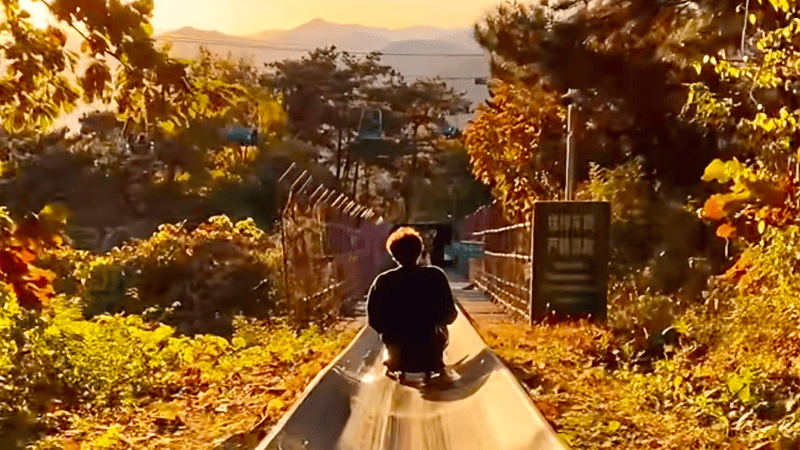
- Toboggan Slide: A winding metal track descending the mountain, extremely popular and suitable for riders above the minimum height requirement
Tickets for these services are purchased separately and can be decided on-site depending on your energy level and route choice.

Source: http://xhslink.com/o/2VMjjhRdrCZ
Tickets & On-site Transport
The standard entrance ticket costs RMB 40 for adults, with discounted tickets (around RMB 20) for children and seniors; very young children are usually admitted free.
To access the wall itself, visitors may choose between a cable car or chairlift, each costing approximately RMB 100 one-way or RMB 140 round-trip. A popular option for descending is the toboggan slide, priced at about RMB 100 per ride. Tickets for these services are typically purchased on site.
A short shuttle bus connects the main entrance area with the ticket gate and is recommended, especially during busy periods.

Source: http://xhslink.com/o/t8YDO3y9B3
Opening Hours
Mutianyu Great Wall operates on a seasonal schedule.
- Peak season (March 16 – November 15):
Weekdays: 7:30 am – 6:00 pm
Weekends & public holidays: 7:30 am – 6:30 pm
Ticket sales usually stop about 30 minutes before closing.
- Off-peak season (November 16 – March 15):
Daily: 8:00 am – 5:30 pm, with last entry around 4:30 pm.
It also offers a seasonal night tour, typically available during summer (late June to August) and holidays like Labor Day, with a usual schedule of 5:00 PM to 9:00 PM. This special experience features the "Starlight Great Wall" light show, cultural performances, and includes unlimited cable car rides. As the specific dates and details are updated annually and require advance online booking with real-name registration, it is essential to check the latest information on the official website or WeChat account before planning your visit.

Source: http://xhslink.com/o/5OIGlN99HI2
How to Get to Mutianyu Great Wall from Beijing
There are several transportation options depending on budget and convenience.
- Public bus: Economical but time-consuming, requiring transfers
- Tour bus: Direct routes from central Beijing, saving time and shuttle fees
- Private car or ride-hailing: The most flexible option, ideal for families or small groups
- Chartered car: Highest comfort level with door-to-door service
Travel time from Beijing averages 1.5 to 2 hours.
Practical Tips for Visiting Mutianyu
Wear sturdy walking shoes, as the stone steps can be steep and uneven. Bring water and light snacks, as supplies on the wall are limited. Restrooms are located at the base area but not on the wall itself. Early arrival significantly improves the experience, especially during peak season.
Allow 4 to 6 hours for a comfortable visit, including transport, walking between watchtowers, and rest time. Arriving early in the morning helps avoid queues at cable cars and chairlifts, particularly during peak season.

Source: http://xhslink.com/o/762TvB8oegn
Continue Exploring Beijing with Local Experiences
Visiting the Mutianyu Great Wall offers a powerful connection to China’s past. If you would like to balance this historical experience with a deeper understanding of modern Beijing, consider exploring the city with locals who can introduce you to neighborhoods, nightlife, and everyday culture beyond landmarks. Discover curated local experiences in Beijing here.
After a full day of hiking along the Mutianyu Great Wall, legs tired but mind still wide awake, many travelers find themselves wondering: what’s next in Beijing? If you still have energy — or simply don’t want the day to end yet — consider stepping into a very different side of the city at night. Beijing’s nightlife isn’t only about bars and clubs, but about hidden spaces, late-night conversations, and the quiet rituals locals turn to after dark.
For a deeper, more personal experience, you can join our Authentic Beijing Nightlife Experience: Secret Bars & Traditional Chinese Divination, where a local host leads you through secret bars, tucked-away venues, and traditional practices that reveal how Beijing really unwinds after sunset. It’s the perfect contrast to a day spent on ancient stone walls — from imperial history to living, breathing city life.
Discover Beijing after dark with Bridge to Locals, and let the Great Wall be only the beginning of your story.







Leave a comment
This site is protected by hCaptcha and the hCaptcha Privacy Policy and Terms of Service apply.