
By Sherry Fei | February 2026
The Summer Palace in Beijing is not simply a royal garden—it is a carefully composed landscape of power, leisure, philosophy, and emotion. Designed as a retreat for emperors of the Qing dynasty, this vast complex blends architecture, water, hills, and long corridors into a living scroll painting.
Whether you are visiting Beijing for the first time or returning to explore it more deeply, the Summer Palace offers a slower rhythm than the Forbidden City, inviting you to walk, pause, and observe. From sunrise reflections on Kunming Lake to golden sunsets over the Seventeen-Arch Bridge, every visit unfolds differently depending on season, light, and pace.
This guide will help you understand how to visit the Summer Palace Beijing efficiently while still allowing room for wandering, discovery, and quiet moments.

Source: http://xhslink.com/o/70zHIZGt17k
A Brief History of the Summer Palace
Originally built during the Qing dynasty, the Summer Palace served as a seasonal retreat where emperors escaped the heat of the city. The design reflects classical Chinese garden philosophy: mountains for stability, water for vitality, and architecture as a bridge between human order and natural flow.
Although damaged during periods of war, the complex was repeatedly restored, becoming a symbol of endurance and imperial aesthetics. Today, it stands as one of the most important historical landscapes in Beijing, recognized as a UNESCO World Heritage Site.

Source: http://xhslink.com/o/70zHIZGt17k
Top Attractions You Should Not Miss
1. The Tower of Buddhist Incense
Standing at the visual center of the Summer Palace, this multi-level structure offers the most commanding panoramic view of Kunming Lake. The climb is steep, but the reward is unmatched—especially in late afternoon light when the lake glows softly below.

Source: http://xhslink.com/o/T1SUMBgEZt
2. The Long Corridor
Stretching over 700 meters, this covered walkway is decorated with more than 14,000 painted panels depicting landscapes, folklore, and classical tales. Walking here feels like moving through a continuous illustrated story, sheltered from sun or rain.

Source: http://xhslink.com/o/4kPAW9Elbbl
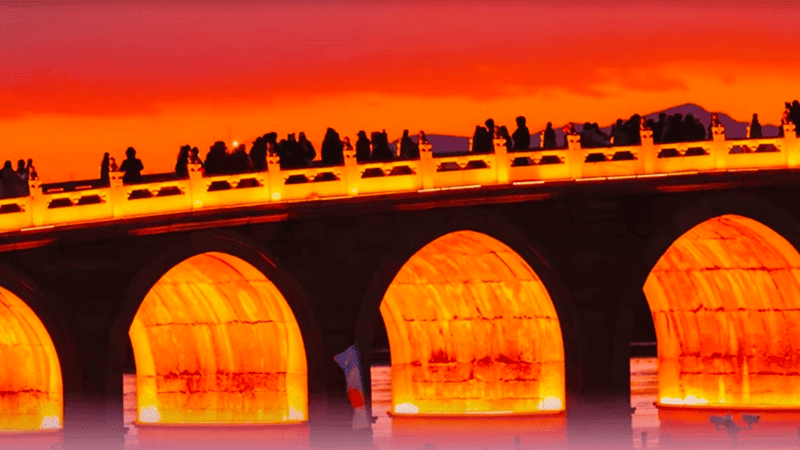
3. The Seventeen-Arch Bridge
Connecting the eastern shore to Nanhu Island, this bridge is famous for its symmetrical arches and seasonal light effects. In winter and late afternoon, sunlight aligns through the arches, creating a striking visual rhythm ideal for photography.

Source: http://xhslink.com/o/GYzJuoWHm8
4. The Marble Boat
The Marble Boat is a unique structure on the western shore of Kunming Lake in the Summer Palace. Built of stone during the Qing dynasty and later renovated under Empress Dowager Cixi, it symbolizes the idea of stability and permanence.
Blending traditional Chinese design with subtle Western elements, the Marble Boat stands in contrast to the surrounding landscape-based architecture. Today, it remains one of the most iconic landmarks of the Summer Palace, often seen as a quiet reflection on power, illusion, and historical change.

Source: http://xhslink.com/o/4AtwQCbUvwa
5. Zhichun Pavilion
A quieter lakeside area favored by locals, known for birdwatching and calm water reflections. Visiting here near sunset offers a softer, more intimate side of the Summer Palace.

Source: http://xhslink.com/o/1DUqXAjmdwq
Seasonal Highlights: When to Visit
- Spring (March to May): Blossoms gradually appear across different zones, making it ideal for leisurely walks and photography.
- Summer (June to August): Lotus flowers bloom across Kunming Lake, and evening visits are especially atmospheric.
- Autumn (September to October): Clear skies and crisp air create ideal walking conditions. Framed by golden ginkgo trees and plane trees, their leaves carpeting walkways and palace grounds.
- Winter (December to February): Fewer crowds and striking minimal landscapes, though preparation for cold weather is essential.

Source: http://xhslink.com/o/AJoD8K6l9GU
Suggested Routes for Different Travel Styles
Classic Highlights Route (4 Hours)
Enter from the North Palace Gate, visit Suzhou Street, climb to the Tower of Buddhist Incense, walk along the Long Corridor, and exit near the East Palace Gate.
Lakeside Leisure Route
Enter from the New Palace Gate, take a boat ride across Kunming Lake to the Marble Boat, stroll the western embankment, and enjoy slow exploration without rushing.
Full Exploration Route (6–8 Hours)
Designed for travelers who want to see everything, this route combines mountain paths, lakeside walks, architectural courtyards, and multiple garden sections. A combined ticket is recommended.

Source: http://xhslink.com/o/70zHIZGt17k
Practical Information for Your Visit
Opening Hours
- Peak Season (April 1 – October 31): Park opens at 6:00 am; last entry at 7:00 pm; closes at 8:00 pm.
- Off Season (November 1 – March 31): Park opens at 6:30 am; last entry at 6:00 pm; closes at 7:00 pm.
Ticket Prices
- Peak Season: Standard entrance ticket RMB 30; combined ticket (including major inner sites) RMB 60.
- Off Season: Standard entrance ticket RMB 20; combined ticket RMB 50.
- Students: Half price with valid ID.
The combined ticket includes access to key attractions such as the Tower of Buddhist Incense, Suzhou Street, and Dehe Garden. Visitors with limited time may prefer the standard ticket, as the full park requires extensive walking.
Inner Attractions Opening Hours
- Major sites including the Tower of Buddhist Incense, Dehe Garden, Suzhou Street, and the Summer Palace Museum operate from 8:00 am to 5:30 pm in peak season and 8:30 am to 4:30 pm in off season.
- Most inner courtyards are closed on Mondays, except during public holidays.
Boat Services on Kunming Lake
- Small boats and sightseeing cruises generally operate from 8:30 am to 5:30 pm, weather permitting. Services may be suspended on windy or rainy days.
Recommended Visit Duration
Allow 4–6 hours for a focused visit covering major highlights. A full exploration of the park can take 6–8 hours.
Transportation
- Subway Line 4 is the most convenient option.
- Beigongmen Station (Exit D) for the North Gate.
- Xiyuan Station (Exit C2) for the East Gate.
Practical Tips
Wear comfortable walking shoes; the park covers nearly 10 kilometers of paths.
Bring sun protection in summer and warm layers in winter.
Photography is best in the early morning or late afternoon when light is softer and crowds are thinner.

Source: http://xhslink.com/o/8KCLmmPdL1o
Dining Options Inside and Nearby
Inside the park, food options are limited and relatively expensive, so bringing snacks and water is advisable. Outside the park, especially near nearby subway stations, you will find a wide range of affordable restaurants and cafes suitable for resting after a long walk.

Source: http://xhslink.com/o/3Sub1eKaKwV
From Imperial Gardens to Modern Beijing: Continue Your Journey
After a full day wandering through the Summer Palace, many travelers find themselves reflecting on the contrast between imperial calm and contemporary life. If you wish to step into a different side of the city after sunset, consider joining an evening experience hosted by locals: Authentic Beijing Nightlife Experience: Secret Bars & Traditional Divination. Join local hosts for drinks and conversation, moving from historical reflection into modern Beijing nightlife.
For travelers who want to explore Beijing beyond famous landmarks, we also offer a curated selection of local experiences led by local residents, covering neighborhoods, food culture, and everyday life in the city.

Source: http://xhslink.com/o/6Lt86E3kwWy
Final Thoughts
The Summer Palace Beijing is not a place to rush through. Its scale, rhythm, and design reward patience and curiosity. Whether you come for history, landscape, photography, or quiet reflection, it offers a rare opportunity to experience how space, power, and nature once coexisted—and how they continue to shape Beijing today.





Leave a comment
This site is protected by hCaptcha and the hCaptcha Privacy Policy and Terms of Service apply.