
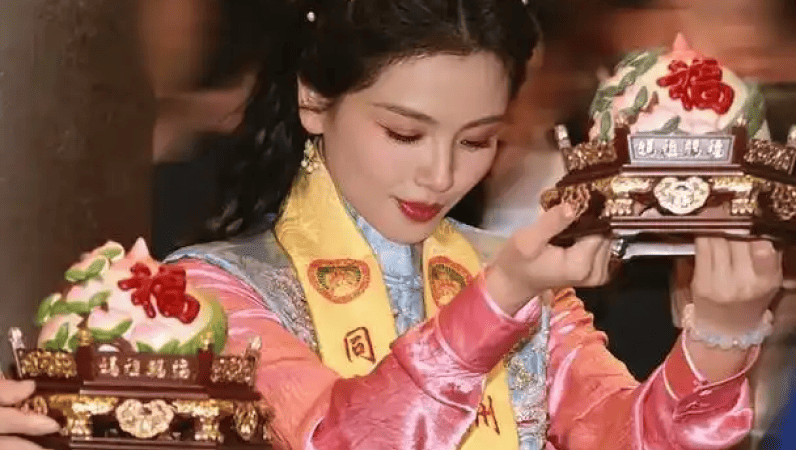
By Sherry Fei | June 2026
China's spiritual traditions are often hidden in plain sight.
You may notice incense curling into the air outside a neighborhood temple, red lanterns hanging during festivals, or offerings placed quietly before family ancestors. While many visitors expect religion in China to be confined to temples, Chinese spirituality often blends seamlessly into daily life.
Understanding Chinese folk religion can help travelers experience China beyond famous landmarks. It explains why families honor ancestors, why temples remain active community spaces, why festivals for spirits continue today, and why certain cultural taboos are still widely respected.
Whether you're visiting a Buddhist temple, exploring a traditional festival, attending a local ceremony, or simply trying to better understand Chinese culture, this guide introduces the beliefs, rituals, festivals, and customs that continue to shape modern Chinese society.

Source: 小红书@闪电平原
What Is Chinese Folk Religion?
Chinese folk religion is not a single organized religion with one founder or central authority.
Instead, it is a living system of beliefs that combines:
- Ancestor worship
- Local deities
- Chinese mythology
- Folk traditions
- Taoist influences
- Buddhist influences
- Seasonal festivals
- Spiritual rituals
Many Chinese people comfortably participate in multiple traditions at the same time. A person may pray at a Buddhist temple, consult a Taoist fortune teller, honor family ancestors, and celebrate local folk festivals without viewing these practices as contradictory.
This flexibility is one of the defining characteristics of Chinese folk religion.

Source: 小红书@闪电平原
Why Chinese Folk Religion Matters to Travelers?
Many aspects of Chinese culture become easier to understand once you recognize the influence of folk religion.
Travelers may encounter:
- Incense offerings in temples
- Lucky charms hanging in taxis
- Family altars in homes
- Festival ceremonies in public squares
- Ritual burning of paper offerings
- Fortune-telling stalls near temples
- Ancestor memorial ceremonies
These practices reveal how traditional beliefs continue to coexist with China's modern cities and technology-driven lifestyle.
Chinese Ancestor Worship: Family Beyond Death
One of the most important foundations of Chinese folk religion is ancestor worship.
For many Chinese families, death does not completely sever the relationship between the living and the deceased. Ancestors are often viewed as continuing members of the family who deserve remembrance, respect, and occasional offerings. This belief influences everything from major festivals to small everyday rituals that travelers may unexpectedly encounter while exploring China.
Many visitors first notice ancestor worship not inside temples, but on ordinary streets. During certain festivals, particularly Qingming Festival and the Ghost Festival, it is common to see people burning joss paper (often called spirit money) near roadsides, residential compounds, intersections, or outside apartment buildings. To foreign visitors, these small fires can appear unusual at first, especially in modern cities filled with skyscrapers and shopping malls.
If you look closely, you may sometimes notice white chalk circles drawn on the pavement with dark burn marks in the center. These are often places where paper offerings have been burned for ancestors or wandering spirits. In some local traditions, the circle creates a symbolic boundary for the offering, while the burned paper serves as spiritual money intended to help deceased relatives on their journey in the afterlife. Some people also believe these offerings provide guidance and resources for spirits returning temporarily to the human world during certain festivals.

Source: 小红书@绪萬
While most locals would not expect foreign visitors to know these customs, it is considered respectful to avoid stepping directly into these circles or disturbing the ashes left behind. Even among younger generations who may not actively participate in the rituals themselves, many still treat these traces with quiet respect.
These small moments reveal an important aspect of Chinese folk religion: spirituality is often woven into everyday life rather than confined to formal religious spaces. A traveler may leave a luxury shopping district, turn a corner into a residential neighborhood, and suddenly encounter a centuries-old ritual still being practiced beneath the glow of modern city lights.
Qingming Festival Traditions: Cleaning Graves and Remembering the Dead
One of the clearest expressions of Chinese ancestor worship can be seen during Qingming Festival, often translated as Tomb-Sweeping Day. Held each spring, Qingming is one of China's most important traditional festivals and offers travelers a unique glimpse into how many Chinese families maintain relationships with previous generations.
During the festival, families travel to ancestral graves to clean tombstones, remove weeds, offer flowers, burn incense, and present food to deceased relatives. In some areas, people also burn joss paper or symbolic paper goods as offerings for the afterlife. To an outside observer, these practices may initially appear solemn, but the atmosphere is often very different from what many Western visitors expect.
One of the most surprising aspects of Qingming is how ordinary and family-oriented it can feel. Relatives gather across multiple generations, children play nearby, and family members spend time catching up while tending to ancestral graves. In rural areas, entire hillsides may fill with families carrying flowers, food, and incense as they make their annual visit. After paying respects, many families continue the day with picnics, walks in the countryside, or shared meals together.

Source: 小红书@泽晞
For travelers who happen to visit China during Qingming Festival, the experience offers an important insight into Chinese culture. The festival is not only about mourning the dead. It is equally about remembering family history, expressing gratitude to previous generations, and reinforcing connections between the living and the deceased. In many ways, Qingming reflects a core idea within Chinese folk religion: family relationships do not simply end with death, but continue through ritual, memory, and annual acts of remembrance.
Travelers should also be aware that Qingming Festival is a national holiday in China. Millions of people travel to their hometowns to visit ancestral graves, which can lead to crowded train stations, highways, and popular tourist destinations.
Chinese Ghost Festival: When the Boundary between Worlds Becomes Thinner
If Qingming feels gentle, the Chinese Ghost Festival feels stranger.
Also known internationally through searches like Hungry Ghost Festival China, Chinese ghost festival…it is one of the most visually fascinating periods in Chinese folk culture.
According to tradition, the gates of the underworld temporarily open, allowing wandering spirits to move among the living.
To avoid offending hungry ghosts, people may burn paper offerings, leave food outside, float lanterns on water, avoid staying out too late at night, avoid major life events during the period
In southern Chinese cities especially, nighttime streets can fill with burning incense and paper flames.
For travelers, it can feel surreal: modern skyscrapers rising behind ancient rituals for invisible spirits.

Source: 小红书@灰灰啊
Chinese Gods and Goddesses: The Enormous Spiritual Cast of Chinese
Chinese Gods and Goddesses: A Living Mythology
One reason Chinese folk religion fascinates travelers is the incredible variety of gods, spirits, and legendary figures that appear throughout the country. Unlike religions with a fixed pantheon, Chinese mythology has evolved over thousands of years by absorbing local history, folklore, Buddhism, Taoism, and regional traditions.
As you travel through different parts of China, you may encounter sea goddesses worshipped along the coast, mountain spirits honored in remote temples, city gods protecting urban communities, or even historical figures who were gradually elevated into divine guardians. For many visitors, one of the surprises of Chinese folk religion is that there is no single "complete list" of Chinese gods and goddesses. The spiritual landscape changes from region to region, reflecting the diversity of Chinese culture itself.

Source: 小红书@深巷暖茶
The City God Temples: Protectors of Urban Life
Among the many deities found in Chinese folk religion, the City God is one of the most uniquely Chinese. Traditionally, major cities were believed to have their own spiritual guardian responsible for protecting local residents and maintaining order in both the human and supernatural worlds.
One of the best places to experience this tradition today is Shanghai City God Temple. Located in the heart of Shanghai's old town, the temple offers an interesting contrast between old and new China. Visitors can watch locals quietly burning incense and making prayers while just outside the temple gates, busy shopping streets, restaurants, and souvenir stalls buzz with activity. The blending of spirituality, commerce, and daily life feels distinctly Chinese and reflects how folk religion continues to exist within modern cities.

Source: 小红书@ming明德
Mazu: Goddess of the Sea
Along China's southeastern coastline, few deities are more important than Mazu, the Goddess of the Sea. For centuries, fishermen, merchants, and sailors prayed to her for protection before setting out across often dangerous waters.
Today, Mazu remains deeply revered in Fujian, Taiwan, and many overseas Chinese communities. Travelers visiting coastal regions may encounter temples dedicated to her or even large-scale Mazu processions, where statues of the goddess are carried through the streets accompanied by drums, incense, fireworks, and community celebrations. These festivals are among the most vibrant examples of living Chinese folk religion and offer a fascinating glimpse into traditions that continue to unite local communities.

Source: 小红书@閩俗觀記.
The Kitchen God
One of the most charming figures in Chinese folk religion is the Kitchen God, a household deity traditionally believed to watch over family life throughout the year. According to popular folklore, he returns to Heaven before Lunar New Year to report on the family's behavior to higher gods.
To encourage a favorable report, some families would offer sweets before his departure, symbolically ensuring he had only "sweet things" to say. While many people today treat the story more as cultural tradition than religious belief, the Kitchen God remains a wonderful example of how Chinese folk religion often blends morality, family values, humor, and everyday life.

Source: 小红书@仙缘
Food, Offerings, and Chinese Folk Religion
Food plays an important role in Chinese folk religion, and travelers will quickly notice that many rituals involve offerings placed before ancestors, deities, or temple altars. Fruits, tea, pastries, rice wine, and other symbolic foods are commonly presented as expressions of respect and gratitude.
This connection between spirituality and food has also influenced Chinese culinary culture. In cities such as Hangzhou, temple traditions, tea culture, vegetarian cuisine, and wellness practices have become closely intertwined. For many visitors, exploring temple food and traditional vegetarian dishes can be one of the most accessible ways to experience the cultural side of Chinese folk religion.

Source: 小红书@大卷包小卷
Folk Religion in Everyday Urban China
Perhaps the most surprising thing for foreign visitors is how ordinary Chinese folk religion can feel. Many travelers arrive expecting spirituality to exist only inside temples, only to discover traces of it scattered throughout everyday urban life.
You might notice a taxi driver hanging a protective charm from the rearview mirror, a shop owner lighting incense before opening for the day, or residents quietly burning paper offerings beside a modern apartment complex during the Ghost Festival. Near popular temples, fortune tellers still set up small stalls, while elderly worshippers draw fortune sticks just a few steps away from busy cafés and shopping centers.
Moments like these reveal one of the most fascinating aspects of contemporary China: the ancient and the modern are not separate worlds. They often exist side by side, woven together into the rhythms of everyday life.

Source: 小红书@momo
Best Cities to Experience Chinese Folk Religion
Beijing
Imperial ritual sites, Lama Temple, Temple of Heaven.
Shanghai
City God Temple and urban folk religion culture.
Hangzhou
Temple culture tied to tea, food, and mountain spirituality.
Fujian Coastal Cities
Strong Mazu traditions and folk religious festivals.
Chengdu
Taoist influences and relaxed temple life integrated into daily culture.

Source: 小红书@甜橙
Tips for Experiencing Chinese Festivals and Temples
Be Respectful with Photography
Some rituals are deeply personal.
Follow Local Behavior
If uncertain, observe before acting.
Don’t Treat Temples Like Museums
Many remain active spiritual spaces.
Festivals Can Become Extremely Crowded
Especially Ghost Festival and major temple fairs.

Source: 小红书@JamesZhang
Why Understanding Chinese Folk Religion Makes Travel More Meaningful
Chinese folk religion is not simply a collection of ancient beliefs.
It continues to influence family traditions, seasonal festivals, food customs, temple culture, and everyday behavior throughout China.
By learning about ancestor worship, Chinese gods, temple etiquette, Ghost Festival traditions, and cultural taboos, travelers gain a deeper appreciation of the values and beliefs that continue to shape modern Chinese society.
The result is a richer travel experience—one that goes beyond sightseeing and reveals the living cultural traditions beneath the surface of contemporary China.

Source: 小红书@Luo
Frequently Asked Questions About Chinese Folk Religion
1. Is Chinese folk religion still practiced today?
Yes. Millions of people continue to participate in ancestor worship, temple rituals, folk festivals, and local religious traditions.
2. What is the Chinese Ghost Festival?
The Ghost Festival is a traditional celebration during which families make offerings to ancestors and wandering spirits during the seventh lunar month.
3. Can tourists visit Chinese temples?
Yes. Most temples welcome visitors, provided they behave respectfully and follow local customs.
4. What are the biggest Chinese cultural taboos for travelers?
Common taboos include disrespecting ancestors, touching sacred objects, stepping on temple thresholds, and behaving loudly during religious ceremonies.
5. Why is ancestor worship important in China?
Ancestor worship reflects respect for family, remembrance of previous generations, and the belief that ancestors remain spiritually connected to the living.
6. What is the difference between Chinese folk religion, Buddhism, and Taoism?
Chinese folk religion incorporates local traditions, ancestor worship, and regional deities, while Buddhism and Taoism are distinct religious and philosophical systems that have strongly influenced Chinese culture.
7. Which Chinese city is best for experiencing folk religion?
Shanghai, Beijing, Hangzhou, Chengdu, and Fujian's coastal cities all offer unique opportunities to experience living folk religious traditions.
8. Is Chinese folk religion the same everywhere in China?
No. Practices vary significantly by region, dialect group, local history, and family traditions.
Explore China Through Local Rituals and Everyday Culture
At Bridge to Locals, we believe China becomes most meaningful when travelers experience not only landmarks, but the living culture surrounding them.
From temple food walks and tea culture experiences in Hangzhou to Beijing hutong nightlife, Shanghai meditation spaces, neighborhood food routes, and local festival culture, our experiences are designed to help travelers understand the rhythms beneath the surface of Chinese cities.
Explore our local blogs and experiences below across Beijing, Shanghai, Hangzhou, Chengdu, Wuhan, and beyond — and discover the everyday spiritual atmosphere that still quietly shapes modern China.
- Beijing Hutong nightlife with local drinking tour
- Yangmeizhu Hutong Old Beijing Culture and Handicraft Tour
- Chinese character meditation experience at Shanghai Jade Buddha Temple
- Chinese Food Philosophy in Hangzhou: A Zen Food Journey
- Tea varieties in Hangzhou: DIY kombucha, Longjing tea, matcha
- Enjoy Hangzhou like an aristocrat: West Lake cruise, tea tasting, painting







Leave a comment
This site is protected by hCaptcha and the hCaptcha Privacy Policy and Terms of Service apply.