
By Sherry Fei | June 2026
For many people outside China, kombucha feels extremely modern.
It appears in minimalist cafes, yoga studios, organic supermarkets, and carefully designed glass bottles with words like:
- probiotic
- raw
- low sugar
- gut health
- wellness
Brands like GT’s, Health-Ade, Humm, Kevita, and Synergy helped turn kombucha into a global lifestyle drink.
But here is the interesting part:
Kombucha may have started in China centuries ago.
And today, while many travelers come to China looking for ancient temples or futuristic skylines, very few realize they can also trace the roots of one of the world’s trendiest fermented drinks.
In Hangzhou — one of China’s most tea-centered cities — that connection between ancient tea culture and modern kombucha culture suddenly feels very clear.

Source: 小红书@Ya’ Coffee
What Is Kombucha?
Let’s start with the basics.
What is kombucha?
Kombucha is a fermented tea drink made using:
- tea
- sugar
- bacteria and yeast culture
- time
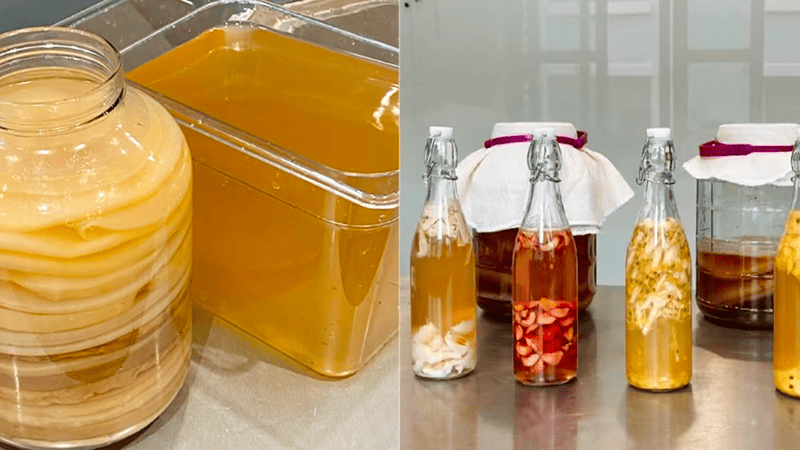
During kombucha fermentation, a living culture called a kombucha SCOBY transforms sweet tea into a slightly sour, lightly sparkling drink.
The result is refreshing, acidic, fruity, and often gently fizzy.
Depending on brewing style, kombucha can taste:
- tart
- vinegary
- floral
- fruity
- earthy
- sweet-sour
Many first-time drinkers are surprised by how complex it feels.

Source: 小红书@花花
Kombucha China: Did Kombucha Really Originate in China?
The exact historical timeline is debated, but many researchers and tea historians trace kombucha’s earliest roots back to China.
This is why searches like:
- kombucha China
- kombucha explained
- origin of kombucha
…have become increasingly common.
Some theories connect kombucha to fermented tea traditions from northeastern China as early as the Qin Dynasty.
Later, the drink likely spread through trade routes into:
- Russia
- Eastern Europe
- eventually North America and beyond
Ironically, kombucha became globally famous overseas first — then returned to China as a trendy modern health drink.
That cultural loop makes kombucha especially interesting in modern Chinese cities today.

Source: 小红书@沄舟

Source: 小红书@Lady FōFō福芙
Why Kombucha Fits So Naturally Into Chinese Tea Culture
China already has thousands of years of tea culture.
So the idea of transforming tea through fermentation does not feel strange here.
In Hangzhou especially, tea is everywhere:
- tea houses
- tea fields
- tea desserts
- tea cocktails
- tea-inspired cafes
- bottled tea drinks
- Longjing-infused creations
Kombucha feels less like an imported trend and more like a modern continuation of an old relationship with tea.

Source: 小红书@从此不做便秘人
What Does Kombucha Taste Like?
One of the most searched questions online is:
What does kombucha taste like?
The answer depends heavily on:
- fermentation time
- tea type
- sugar level
- fruit additions
- brewing style
Generally, kombucha tastes:
- lightly sparkling
- sweet and sour
- slightly funky
- tea-forward
Some versions resemble sparkling fruit vinegar. Others feel closer to natural soda or dry cider.
Good kombucha should feel refreshing rather than overwhelming.

Source: 小红书@沄舟
Does Kombucha Have Caffeine?
Yes — usually.
Because kombucha begins as tea, it naturally contains some caffeine.
Searches like:
- does kombucha have caffeine
- kombucha tea drink
…are very common.
The caffeine level is generally lower than coffee, though it varies depending on the tea base.

Source: 小红书@栗🌰
Does Kombucha Have Alcohol?
Also yes — technically.
During fermentation, small amounts of alcohol naturally develop.
That is why people search:
- does kombucha have alcohol
- is kombucha alcoholic
- hard kombucha
- kombucha alcohol
Most standard kombucha contains only trace amounts of alcohol.
Hard kombucha, however, is intentionally brewed with higher alcohol content.

Source: 小红书@从此不做便秘人
Kombucha Benefits: Why People Love It
Another major search topic:
Is kombucha good for you?
People often associate kombucha with:
- probiotics
- digestion
- gut health
- wellness culture
This is why terms like:
- kombucha probiotic drink
- kombucha benefits
- what is kombucha good for
…are so popular online.
Of course, kombucha is not magic medicine.
But many people enjoy it because it feels lighter, fresher, and less sugary than conventional soft drinks.

Source: 小红书@苹果味🍎
Kombucha Aesthetic and Modern Urban China
Kombucha’s popularity is not only about health.
It also became deeply connected to:
- cafe culture
- creative spaces
- design aesthetics
- slow living
- independent lifestyle brands
In cities like Hangzhou, Shanghai, and Shenzhen, kombucha often appears in beautifully designed spaces blending:
- plants
- ceramics
- tea culture
- modern minimalism
- handmade fermentation
That atmosphere itself became part of the drink’s appeal.

Source: 小红书@米几酵室
A Rare Kombucha Experience in Hangzhou
This is where Hangzhou becomes especially interesting.
Our Hangzhou tea culture experience includes a hands-on kombucha workshop at what is currently one of the only dedicated kombucha DIY experience spaces of its kind in China.
Instead of simply drinking bottled kombucha, visitors can:
- learn about kombucha fermentation
- understand SCOBY culture
- choose ingredients
- prepare their own second fermentation kombucha
- explore the relationship between Chinese tea culture and modern fermentation trends
It is not a factory tour or commercial tasting room.
It feels much more personal and experimental — somewhere between tea culture, fermentation workshop, and creative lifestyle experience.
And honestly, experiences like this are still extremely rare in China.

Source: 小红书@沄舟
Kombucha and Modern Hangzhou
Hangzhou is probably one of the best cities in China for this experience. Why?
Because the city naturally connects:
- ancient tea history
- modern cafe culture
- wellness trends
- creative aesthetics
- slower lifestyle energy
You can spend the same day:
- seeing Longjing tea culture
- drinking a Longjing Americano
- making kombucha
- trying traditional tea whisking
- sitting beside West Lake at sunset
Very few cities blend old and new this smoothly.

Source: 小红书@从此不做便秘人
Practical Tips for Kombucha Travelers in China
Don’t Expect Kombucha Everywhere
Despite growing popularity, kombucha is still relatively niche compared to coffee or milk tea.
Tea Knowledge Helps
Understanding Chinese tea culture makes kombucha in China feel more meaningful.
Summer Is the Best Season
Hot weather makes kombucha especially refreshing.

Source: 小红书@梦如
Discover China Through Tea, Fermentation, and Local Culture
At Bridge to Locals, we believe China becomes most interesting when travelers experience the connection between old traditions and modern everyday life.
Sometimes that means:
- handmade kombucha workshops
- tea culture experiences
- hidden cafes
- local nightlife
- temple food
- neighborhood markets
- conversations that never appear in guidebooks
Explore our Hangzhou tea culture experiences Tea varieties in Hangzhou: DIY kombucha, Longjing tea, matcha, local food routes Hangzhou Food Tour: Local Bazaar and Street Food Walking Tour, nightlife walks Hangzhou nightlife tour: bars, cocktails, beer and night markets, temple culture tours Chinese Food Philosophy in Hangzhou: A Zen Food Journey, and city blogs across China — and discover a version of China that feels alive, personal, and unexpectedly modern.






Leave a comment
This site is protected by hCaptcha and the hCaptcha Privacy Policy and Terms of Service apply.