
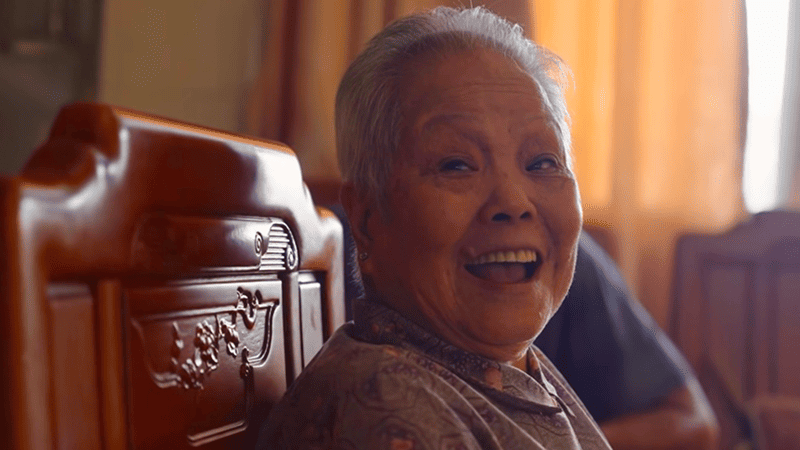
By Sherry Fei | March 2026
When people think of Guangzhou or Shenzhen, they usually picture skyscrapers, tech innovation, global trade, and fast economic growth.
Few would associate these global cities with a quiet female rebellion that took place just outside their modern borders.
Yet in the rural areas of the Pearl River Delta — near today’s Guangzhou and within the broader Lingnan cultural sphere that shaped southern China — there once lived a group of women who made a radical decision: they chose never to marry.
They were known as the “Self-Combed Women.”
This International Women’s Day, their story deserves to be remembered.

Source: 小红书@小家电女王苏菲亚
What Does “Self-Combed” Mean?
The term refers to a coming-of-age ritual.
Traditionally, young women in southern China would mark adulthood through a hair-combing ceremony before marriage. Marriage was assumed. The ritual was symbolic preparation for becoming a wife.
But in parts of the Pearl River Delta — especially in what is now Shunde district (today under Foshan, neighboring Guangzhou) — some women performed this ceremony alone.
They combed their hair themselves.
By doing so, they publicly declared that they would never marry.
This was not a temporary protest. It was a lifelong commitment.
Once a woman “self-combed,” she entered a different social path — one that rejected marriage, childbirth, and dependence on a husband.

Source: 小红书@GreenBAZAAR芭莎绿岛
Why Did This Happen in Southern China?
The movement did not emerge randomly. It grew from the unique economic conditions of the Guangzhou region during the late Qing Dynasty and early 20th century.
1. Economic Independence
The Pearl River Delta was one of China’s most commercially active regions. Silk production was especially strong in Shunde and surrounding areas. Women worked in silk reeling factories and earned their own income.
Unlike women in many rural regions who depended financially on marriage, these women could support themselves.
Economic autonomy changed social possibilities.
2. Harsh Marriage Norms
Traditional marriage often meant moving into the husband’s household, serving in-laws, and having limited personal freedom. Divorce was rare and socially stigmatized.
For some women, especially those with stable income, marriage offered fewer advantages than independence.
Choosing not to marry became a rational — if socially risky — decision.
3. Overseas Labor and Migration Networks
The broader Guangzhou trading system had long connected southern China to Southeast Asia. Some self-combed women later worked abroad as domestic workers in places like Singapore and Malaysia, sending money home.
This global exposure reinforced their financial independence.

Source: 小红书@FishZhang
Not Modern Feminism — But Something Close
It is important not to project modern political labels backward.
The self-combed women did not organize under a banner of “women’s rights.” They were not part of a formal feminist movement.
But their actions contained elements that resonate today:
- Control over their own marital status
- Economic self-sufficiency
- Formation of female communities
- Rejection of patriarchal family expectations
Many lived together in so-called “spinster houses,” supporting one another emotionally and financially.
Their choice was not about ideology. It was about autonomy.
And in early 20th-century rural China, that was revolutionary enough.

Source: 小红书@Bobo观影记
Social Consequences and Risks
The decision was not easy.
Families often opposed it. Community members sometimes viewed self-combed women with suspicion. In certain cases, families forced reluctant daughters into marriage anyway.
If a self-combed woman later married, she could face social ridicule for breaking her vow.
The commitment carried both social cost and moral weight.
Yet many remained steadfast.

Source: 小红书@于韫祯
Why This Story Matters Today
Guangzhou and Shenzhen today represent modernity, economic reform, and global ambition.
But the Pearl River Delta’s history shows that social experimentation did not begin with tech startups or urbanization. It existed long before — in villages where women quietly negotiated new ways of living.
The self-combed women demonstrate that:
- Economic opportunity reshapes gender roles
- Cultural change often starts locally
- Female agency has deep roots in Chinese history
Their story complicates stereotypes that portray traditional Chinese society as uniformly passive toward women’s autonomy.
History, like modern China itself, is more layered.

Source: 小红书@元夫
Can You See This History Today?
While the original communities were concentrated in rural districts near Guangzhou, elements of this history are preserved in regional museums and cultural archives across the Pearl River Delta.
Visitors exploring the cultural heritage of southern China — including museums in Guangzhou and surrounding cities — may encounter exhibitions referencing these women.
Their physical communities have largely disappeared.
Their legacy, however, remains a fascinating chapter in the region’s social history.

Source: 小红书@Canton的书鱼
Bingyutang Near Guangzhou & Shenzhen: Legacy of China’s Self-Combed Women
Bingyutang is a striking example of Southern Chinese courtyard architecture with a distinctive Nanyang flair. Completed in 1950, it was funded with over HK$80,000 by more than 400 self-combed women living abroad in Singapore and over 100 self-combed women who remained in Shunde’s Jun’an Shatou village. Originally built as a retirement home for these pioneering women, Bingyutang stands as a testament to the enduring bond of Shunde’s overseas Chinese sisters.
During the 1930s, Shunde’s silk industry was hit hard by the global economic crisis, prompting many self-combed women to work in Hong Kong, Southeast Asia, and beyond. In an era of scarcity, these women chose responsibility over marriage, dedicating themselves to supporting their families. Households with a self-combed daughter often became the wealthiest in the region. While they lived solitary lives and endured countless hardships, their remittances quietly sustained families through turbulent times—a selfless act of love often unnoticed even by the women themselves.
For many, leaving home meant half a century of separation. They departed in their youth, only to return with silvered hair. Bingyutang became more than a residence; it was a sanctuary, a place where these women could belong, a physical and emotional home after decades of sacrifice. It is, at its heart, a story of solidarity—a true “girls help girls” legacy.

Source: 小红书@元夫
A Quiet Rebellion in the Shadow of Global Cities
International Women’s Day often highlights well-known political leaders and activists.
But history is also shaped by those who acted quietly.
In villages near today’s Guangzhou and within the broader region that now includes Shenzhen’s economic powerhouse, some women redefined adulthood not through marriage — but through self-determination.
They combed their own hair.
They earned their own income.
They lived on their own terms.
Before feminism had a name in China, autonomy already had a form.
And it began, quietly, in the Pearl River Delta.






Leave a comment
This site is protected by hCaptcha and the hCaptcha Privacy Policy and Terms of Service apply.