
By Sherry Fei | January 2026
When the Chinese New Year rolls around, it's not just about celebrating the passing of time – it’s a moment to indulge in food steeped in centuries of tradition, each dish brimming with significance and rich symbolism. For generations, food during this season has been more than nourishment; it has been a medium for wishes, blessings, and hopes for the year ahead. The joyous festival offers a rich tapestry of tastes, colors, and aromas, with each plate telling a story of prosperity, family, and good fortune.
Here, we delve into the heart of the celebrations with ten iconic dishes that have become essential to the Chinese New Year feast, ensuring luck, health, and success for the year to come.

Source: http://xhslink.com/o/6rkIBdJKdA7
1. Dumplings (Jiaozi) – A Symbol of Wealth and Prosperity
Dumplings, beloved across China, are the golden ticket of the Chinese New Year table. Shaped like ancient Chinese gold ingots, they symbolize wealth and prosperity. The practice of eating dumplings stems from the hope that the coming year will bring financial success, abundant resources, and familial harmony. In some regions, a coin is hidden inside one of the dumplings, and the fortunate soul who finds it is said to be blessed with good fortune for the year.
But the significance of dumplings goes beyond prosperity. Their very preparation – folding the filling into a delicate, golden wrapper – mirrors the closing of a chapter, the beginning of a new one, and the passage of time, as Chinese people say, "New Year's Eve is the moment of exchanging old for new."

Source: http://xhslink.com/o/72k6D0ZBubB
2. Fish – "May There Be Surplus Every Year"
In Chinese, the word for fish sounds like the word for surplus, making it a must-have for the New Year feast. Fish represents abundance and good luck. As a symbol of wealth and prosperity, it is considered auspicious to leave the head and tail of the fish uneaten, signifying "having surplus year after year." The most common fish dishes are steamed or braised, with the fish being a centerpiece, often garnished with fragrant herbs.
The act of consuming fish during Chinese New Year is an ancient tradition, one that has echoed through generations as a prayer for an overflowing, fruitful year. Whether it's carp or a tender, juicy tilapia, the fish on the table brings with it an invitation for fortune to swim your way.

Source: http://xhslink.com/o/811utGmQeLv
3. Spring Rolls – A Crispy Wish for Wealth
Spring rolls, golden and crispy, are not just a delightful snack; they are another beacon of fortune. Their golden exterior symbolizes wealth and prosperity, their crispiness reflecting the "crisp" beginning of the year. In southern China, spring rolls are often served during the first meal of the year, their crispy texture believed to usher in a year of success and financial growth.
Stuffed with a variety of fillings – from vegetables to savory meats – spring rolls are more than just tasty. They are a delightful representation of the promise of a golden year ahead.

Source: http://xhslink.com/o/5D5RpU4YAgm
4. Rice Cakes (Nian Gao) – A Steady Rise to Success
With their chewy texture and glutinous sweetness, rice cakes (nian gao) are a symbol of progress, promoting growth and success. The name "nian" means "year," and "gao" means "tall" or "high," thus eating rice cakes is believed to bring about growth in one’s career, family, and relationships, year after year. Traditionally made from glutinous rice flour, these cakes are enjoyed across China in a variety of forms – from sweet versions in the South to savory variations in the North.

Source: http://xhslink.com/o/6qBebZvjhag
5. Sweet Rice Balls (Tang Yuan) – A Touch of Sweetness for Family Unity
Tang Yuan, with their chewy texture and sweet fillings, are an integral part of the New Year tradition. The round shape of these glutinous rice balls symbolizes completeness and family unity. As families gather around the dinner table, eating tang yuan together is a way to express the hope for a year full of harmony, peace, and prosperity. Their sweetness is symbolic of the joy and happiness that the New Year promises to bring.

Source: http://xhslink.com/o/7GhqGoE2lxJ
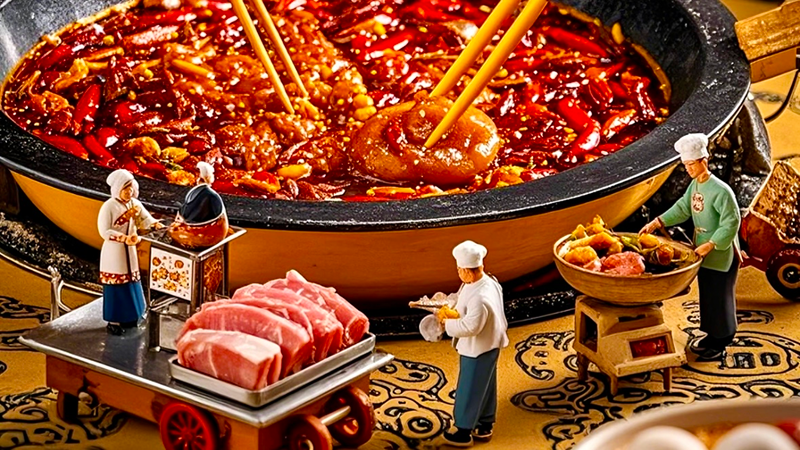
6. Hot Pot – A Boiling Cauldron of Togetherness
No Chinese New Year celebration would be complete without the communal experience of hot pot. This steaming pot, filled with broth and ingredients to dip and cook, embodies the warmth of togetherness. As family members and friends gather around, dipping slices of meat, vegetables, and noodles into the pot, hot pot represents not just culinary abundance but also the closeness of relationships. It’s a dish that brings people together, offering warmth and shared laughter, symbolic of the harmonious year ahead.

Source: http://xhslink.com/o/9D4qV9athlC
7. Steamed Buns (Baozi) – Good Fortune Rising
Steamed buns, known as baozi, come in many shapes and sizes, often filled with savory or sweet fillings. Their round shape represents fullness and good fortune, and many families choose to make baozi with fillings like sweet red bean paste or savory pork. The act of sharing these buns during the New Year symbolizes unity, prosperity, and the rising hope for a better year.

Source: http://xhslink.com/o/53tim8RfvDS
8. Citrus Fruits – A Symbol of Luck and Prosperity
Citrus fruits, especially mandarin oranges, are an essential part of Chinese New Year food traditions. Their round shape represents completeness and reunion, while their bright golden color symbolizes wealth and good fortune. During the Chinese New Year, citrus fruits are commonly offered to family members and guests as a gesture of blessing and goodwill.
Kept whole and often presented in pairs, citrus fruits express wishes for harmony, balance, and prosperity in the year ahead. Beyond symbolism, their fresh aroma and light sweetness provide a refreshing contrast to the rich flavors of the Chinese New Year feast, reminding people that abundance should be enjoyed with balance.
As one of the most recognizable Chinese New Year lucky foods, citrus fruits quietly carry hopes for success, happiness, and a smooth year to come.

Source: http://xhslink.com/o/51thgj96sZM
9. Cured Meat – Preserving Abundance Through Time
Cured meat is a classic element of traditional Chinese New Year food, especially in winter regions where preservation once meant survival. Hung in open air and slowly dried, cured pork represents preparation, patience, and abundance saved for the future.
On the Chinese New Year table, cured meat symbolizes a well-stocked household and a year free from hardship. Its deep aroma and rich flavor evoke memories of home, family kitchens, and the quiet anticipation of reunion. More than a dish, cured meat is a reminder that prosperity is not only earned, but also carefully kept.
As part of a Chinese New Year feast, cured meat reflects the wisdom of seasonal living and the hope that the coming year will be as full and satisfying as the one prepared before it.

Source: http://xhslink.com/o/55jEYmmV2CG
10. Candied Fruits and Nuts – A Sweet Start to a Sweet Year
The New Year is a time to sweeten life, and candied fruits and nuts are a delightful treat. From candied ginger to lotus seeds and preserved kumquats, these sweet treats are enjoyed for their sugary taste and auspicious meanings. In many parts of China, the act of eating sweets during the New Year is believed to usher in sweetness in life, ensuring that the year ahead will be filled with happiness, success, and sweetness in every corner of life.

Source: http://xhslink.com/o/97F2x6JMAZW
Want to Experience Authentic Chinese New Year Foods?
If you're eager to dive into the flavors of Chinese New Year and experience the true taste of this beautiful tradition, look no further. Through our platform, you can connect with local experts who will guide you through a feast of authentic dishes. During the Lunar New Year season, you can experience traditional Chinese New Year food through real meals, local stories, and unhurried time spent together — cooking, dining, walking, and talking like friends. If you want to understand Chinese New Year food traditions not as a menu, but as a living culture shaped by people, memories, and places, let a local walk with you, eat with you, and share the festival from the inside.






Leave a comment
This site is protected by hCaptcha and the hCaptcha Privacy Policy and Terms of Service apply.