
By Sherry Fei | December 2025
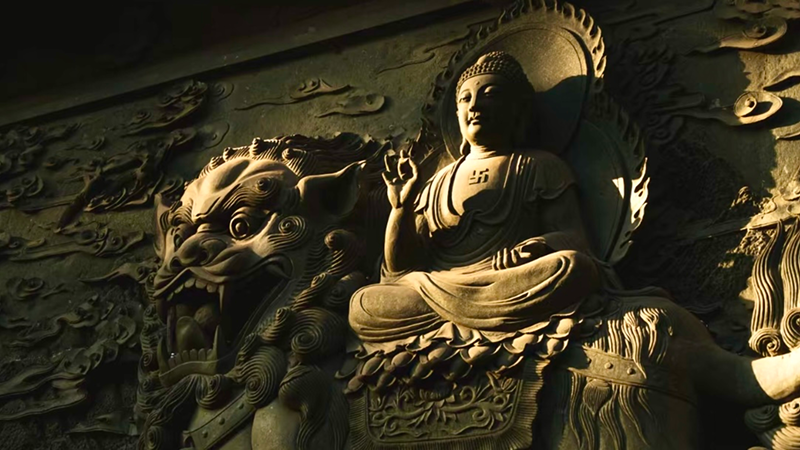
When travelers search “what is Hangzhou famous for” or look at a Hangzhou map, one landmark always appears near the top: the Lingyin Scenic Area. Hidden among lush hills west of West Lake, this valley of temples has been a center of Chinese spirituality for more than 1,600 years.
And today, it has become even more accessible — as of December this year, both Feilai Peak and Lingyin Temple have officially removed their entrance fees, making this one of the most meaningful places in Hangzhou to explore ancient China’s religious heritage.
This mountain valley is home to three major temples:
- Lingyin Temple — one of the most famous Chinese temples
- Yongfu Temple — serene, secluded, and full of cats
- Faxi Temple — the “internet-famous” temple beloved by young people
Together they form a rare place in China where natural beauty, Buddhist architecture, stone grottoes, incense, and living folk belief all coexist.

Source: http://xhslink.com/o/38h5otM6Wfe
Where Is Hangzhou—and Why Does Its Location Matter for Buddhism?
Hangzhou is located in eastern China, just south of Shanghai, in a region historically known as Jiangnan—a land of rivers, misty mountains, slow mornings, and old villages. This geography isn’t just beautiful; it explains why Buddhism took such deep root here.
For centuries, Jiangnan’s mild climate, fertile fields, and prosperous canal trade nurtured a gentle, contemplative lifestyle. Scholars, monks, poets, and travelers all gathered in this region, creating a culture that naturally embraced temples, meditation, and spiritual retreat.
This is also why the Lingyin Scenic Area—hidden in a forested valley behind West Lake—became one of the most important Buddhist centers in China. The mountains here form a natural sanctuary, making Hangzhou a place where people could easily seek spiritual refuge.
So when people search “where is Hangzhou?”, the answer is more than a point on the map.
Hangzhou sits at the heart of a region where nature, culture, and spirituality intertwine—and where Chinese folk Buddhism has flourished for more than a thousand years.
Feilai Peak — Stone Grottoes, Legends, and Now Free Entry
Before entering the temples themselves, you first walk through Feilai Peak, an area filled with hundreds of Buddhist carvings dating back to the 10th century. The cliffs are dotted with ancient grottoes, arhats, flying apsaras, and stories from Buddhist sutras. The setting feels like an open-air museum carved into the mountain.
This scenic zone is deeply embedded in Chinese memory — frequently appearing on lists of ancient China temples and famous Chinese temples.
And now, with entry completely free, visitors can explore its caves, bridges, bamboo paths, and streams at their own pace.

Source: http://xhslink.com/o/40Ki5h3n1oI
Lingyin Temple — Hangzhou’s Spiritual Heart
As you continue deeper into the valley, incense begins to fill the air. This is Lingyin Temple (Lingyin Temple Hangzhou), one of China’s most important Buddhist temples and a powerful expression of what religion goes to temple in Chinese society.
Founded in AD 326, Lingyin has long served as a sanctuary for monks, emperors, scholars, and common people. Its name means “Temple of the Soul’s Retreat.”
Lingyin Temple is not only a historic site—it is a place where tradition is lived, tasted, and carried home.
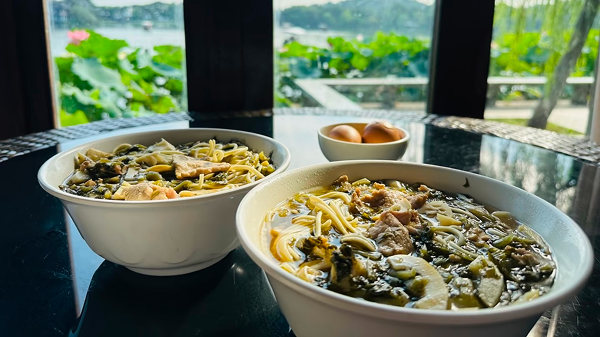
Many travelers start their visit with a bowl of the temple’s famous vegetarian noodles. Simple yet deeply comforting, the broth is light, the toppings modest, and the mood quietly devotional. For locals, eating this bowl is a ritual—an offering of peace and good fortune for the year ahead. During New Year’s Day and major festivals, long lines form early in the morning with people hoping to “begin the year with purity.”
Inside the temple, you will find another signature object of Chinese folk Buddhism: the Shiba Zi prayer beads, often translated as “Eighteen Seed Beads.” These bracelets are made from eighteen different natural seeds—symbolizing the Eighteen Arhats—and are believed to bring blessings, protection, and a reminder to cultivate patience and compassion. Many visitors choose a string of beads as a keepsake, not merely as a souvenir, but as a quiet spiritual companion.
Lingyin’s halls rise with layers of incense smoke, each hall housing towering Buddha statues and ancient inscriptions. The temple draws not only devout Buddhists but also young people, families, students, artists, and travelers who come seeking calm in an otherwise fast-paced world. As you walk deeper into the mountain valley, the noise of Hangzhou fades. In its place is chanting, rustling bamboo, and an atmosphere of timeless serenity—an experience that explains why Chinese folk religion, especially Buddhism, thrives so strongly in Hangzhou.

Source: http://xhslink.com/o/33r7peCdYad
Yongfu Temple — A Quiet Hillside Temple Filled with Cats
A short climb above Lingyin brings you to Yongfu Temple, which feels like a hidden monastery tucked into the hills.
Yongfu Temple holds a quiet, almost otherworldly gravity. The temple is small, tucked into the folds of the mountain, yet it feels like a self-contained field of stillness that gently gathers the mind back into the body. The place is known for its many cats—calm, unhurried creatures that roam the stone steps and verandas as though they are the true custodians of the temple. They neither approach nor avoid you; instead, they lift their eyes with a slow, deliberate grace, as if weighing whether your spirit is quiet enough to be allowed inside their world.
In spring, the temple shifts into another register entirely. Hydrangeas bloom in clusters along the paths and the mossy walls, unfolding in muted shades of mist-blue, lilac, and pale, washed-out pink. When the breeze moves through them, the blossoms tremble with such softness that the whole hillside seems to exhale. The scene is not spectacular in the usual sense, yet it unsettles something within you—an ache, a hush, a faint sense that time has loosened its hold and is hovering just slightly out of reach. Sitting on the steps, surrounded by those quiet flowers and the unbothered cats, you feel suspended between the real and the almost-real, as though you’ve stepped half a foot outside the world without noticing.
Every visit leaves a subtle afterglow. Yongfu Temple does not offer salvation, nor does it demand introspection; instead, through cats, through flowers, through silence, it extends a wordless kind of acceptance—one that allows you to simply pause, and breathe, and exist.

Source: the author

Source: the author
Faxi Temple — The “Internet-Famous” Temple Loved by Young Travelers
Not far from Lingyin Temple, hidden among the quieter hills of the Lingyin Scenic Area, lies Faxi Temple, a peaceful complex that has unexpectedly become one of the most “viral” temples among young visitors in recent years. Though smaller and more secluded than Lingyin, Faxi is beloved for its gentle atmosphere, ochre walls, and winding mountain paths shaded by ancient camphor trees.
Today, Faxi Temple is known across social media as a place where many young people come to pray for relationships and romantic blessings. Its halls are filled with handwritten wish cards, discreetly tied red strings, and small offerings placed by those hoping for a new beginning, a healed heart, or a future partner. The temple’s quietness—away from the crowds—makes these moments of wishing feel more personal, more earnest.
Despite its online fame, Faxi retains the warmth of a lived temple. Devotees light incense slowly, monks chant behind half-opened doors, and the scent of pine hangs in the air. For young travelers, this blend of calm devotion and cultural meaning is precisely what makes the site resonate: it is a space where ancient Chinese folk religion meets the hopes and uncertainties of modern life.
Whether visitors come to pray for love, seek good fortune, or simply wander the tranquil courtyards, Faxi Temple has become a symbol of how spiritual traditions continue to evolve—quietly, sincerely—within contemporary Hangzhou.

Source: http://xhslink.com/o/2XglWZv9a13
Chinese Folk Religion in Hangzhou — A Tradition Still Alive
While temples like Lingyin, Yongfu, and Faxi are major tourist destinations, Hangzhou’s religious life does not exist only inside temples. In fact, local Chinese folk religion remains vibrant.
New Year’s Day Temple Visits
Every Lunar New Year’s Day, thousands of Hangzhou locals line up at temples before dawn to pray for blessings. Incense smoke fills the valley, echoing centuries-old traditions.
The Dizang (Kṣitigarbha) Tradition — A Local Ritual Still Practiced Today
In Jiangnan — particularly Hangzhou — devotion to Dizang Bodhisattva is especially strong.
According to folk belief, Dizang once vowed:
“If hell is not empty, I will not become a Buddha.”
Because of this compassion for all suffering beings, people believe Dizang protects both the living and the deceased.
In Hangzhou, during the 7th lunar month (traditionally tied to the Zhongyuan Festival / Ghost Festival), families continue rituals that have been passed down for generations:
- “Lighting Dizang Lamps” — placing candles on stone steps outside the home
- “Inserting Dizang Incense” — incense sticks placed in the ground in front of the house
And on the 30th day of the 7th lunar month, believed to be Dizang’s birthday, many neighborhoods glow softly with candlelight. This practice continues in local communities and villages — a deeply meaningful expression of Chinese compassion, remembrance, and hope.

Source: http://xhslink.com/o/YtUyHPS8B1
Connection to Ancestral Worship
These folk Buddhist rituals are closely tied to China’s traditional agricultural clan culture.
Just as Chinese families visit temples, they also practice ancestor worship — another key part of what is Chinese folk religion. The two traditions reinforce each other, shaping the spiritual rhythm of daily life.

Source: http://xhslink.com/o/AOiQMCsg9V4
Belief in Karmic Retribution
Another reason Chinese folk Buddhism remains so deeply rooted in everyday life is the enduring belief in karmic retribution, a concept commonly referred to as baoyinglun. For many ordinary people, the idea that good deeds bring blessings and harmful actions eventually bring consequences forms an invisible moral framework guiding daily behavior.
This belief system does not belong to formal doctrine alone — it shapes how families raise children, how communities understand justice, and why visiting temples feels meaningful even to those who are not strictly religious. Lighting incense, offering prayers, or making wishes at temples in China often reflects a quiet hope that virtue will be rewarded and misfortune eased.
In cities like Hangzhou, where folk Buddhism flourishes, karmic belief acts as a cultural undercurrent, reinforcing temple traditions, seasonal rituals, and the emotional comfort people seek in moments of uncertainty.

Source: http://xhslink.com/o/23A0sHlQMg
Why These Temples Matter — Beyond Sightseeing
Hangzhou’s temple culture shows that religion in China is not only institutional but deeply intertwined with everyday life — from temple visits, seasonal rituals, and Dizang traditions to the continuing importance of ancestors.
Exploring Feilai Peak and the Lingyin temple cluster allows travelers to see how Buddhism in China is lived, not only preserved.
Conclusion — Join Me for a Temple Journey Through Hangzhou
For travelers who want to understand Chinese folk Buddhism, explore famous Chinese temples, or simply experience Hangzhou beyond the tourist map, I warmly invite you to join me through Bridge to Locals.
As your local guide, I can take you through:
- the now ticket-free Feilai Peak Scenic Area
- the grand halls of Lingyin Temple
- the quiet paths of Yongfu Temple (and meet its cats)
- the lively, photo-friendly courtyards of Faxi Temple
Along the way, we’ll talk about living folk beliefs — Dizang traditions, temple rituals, ancestor worship — and how these habits continue shaping local life today.
If you’re curious about the temples behind the postcards and want to explore Hangzhou with authentic depth, come with me on this journey.
Together, we’ll discover a side of Hangzhou that is spiritual, cultural, and deeply human.






Leave a comment
This site is protected by hCaptcha and the hCaptcha Privacy Policy and Terms of Service apply.