
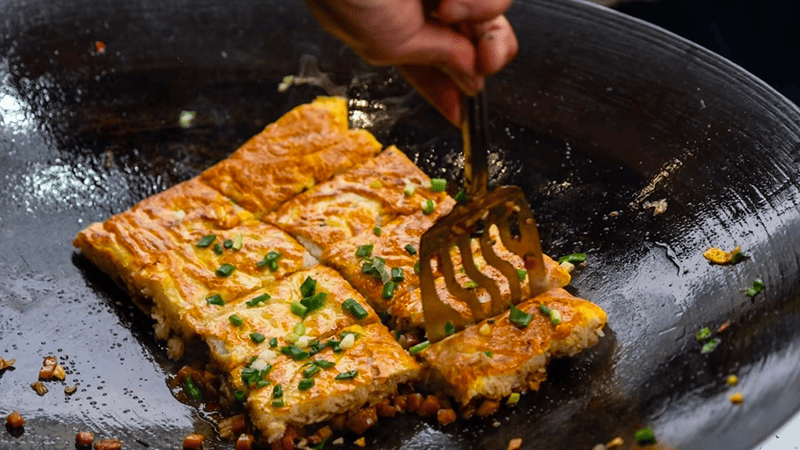
By Sherry Fei | March 2026
When people talk about Chinese cuisine, they often look for schools, systems, and rules — Sichuan heat, Cantonese finesse, Huaiyang elegance.
Wuhan doesn’t fit neatly into any of them.
Instead, Wuhan cooks with instinct. With improvisation. With a stubborn refusal to follow the “proper” way of eating.
And somehow, the more unconventional it gets, the better it tastes.
This is not a province that worships refinement. It worships satisfaction.

Eating First, Rules Later: The Wuhan Food Mentality
To understand food in Wuhan, especially in cities like Wuhan, Jingzhou, or Xiangyang, you have to forget the idea that meals must be formal, seated, or even fully contained.
Food here bends around life, not the other way around. Breakfast is eaten while walking. Noodles are balanced on bicycle handlebars. Plastic bowls hold dishes that would be served on porcelain elsewhere.
There’s a kind of DIY, almost punk attitude to it — a belief that as long as it tastes right, everything else is negotiable.
This mindset didn’t appear overnight. Wuhan’s river ports once ran on speed and stamina. Dockworkers ate quickly, drank early, and learned how to extract maximum comfort from simple ingredients. That rhythm never left.

Source: 小红书@萤火之森
The Art of Eating on the Move (and Eating Early)
Mornings in Wuhan don’t wait for anyone. People clutch bowls of beef rice noodles, tuck fried dough or sesame cakes under their arms, and eat while crossing streets. Some manage full breakfasts on a single hand, finishing noodles at traffic lights.
In older neighborhoods, a different morning scene unfolds: plastic tents, low stools, a bubbling pot of offal hotpot heated by alcohol burners, and small glasses of grain liquor. Conversations stretch for hours. Time slows down.
Fast breakfasts and slow morning drinking may seem contradictory, but they come from the same source — work hard, eat well, recover fully.

Source: 小红书@萤火之森
When “Cheap” Tableware Meets Serious Food
In Wuhan, disposable bowls and soft plastic cups are everywhere — from street stalls to banquet tables. To outsiders, it looks careless. To locals, it’s practical, clean, and unpretentious.
This attitude extends to banquets, especially in places like Xiantao. There, lavish seafood spreads are replaced by something more radical: restraint.
A typical local banquet might climax not with a famous regional specialty, but with a humble shredded pork and pickled mustard greens dish. And it works — because after rounds of drinking, it’s exactly what everyone wants. Comfort over performance. Always.

Source: 小红书@背地李
Winter Comfort, Wuhan Style: Cola, Lotus Root, and Fermentation
When winter arrives, Wuhan’s “unorthodox” instincts really shine.
While most of China turns to herbal teas, Wuhan households quietly heat up large bottles of cola with fresh ginger.
Ginger cola is treated as common sense: warming, soothing, and somehow acceptable for all ages.
Then there’s lotus root soup — arguably the province’s emotional anchor.
Powdery lotus root simmered with pork ribs, black pepper, and scallions becomes a ritual dish, especially around Lunar New Year. It’s not fancy. It’s essential.
Other cold-season staples appear almost instinctively:
- Rice-and-mung-bean noodles (dou si), cooked into thick, comforting bowls
- Fermented shrimp paste (xia zha), salty and deeply nostalgic
- Hezha, a coarse soybean mash cooked slowly with meat and eggs — rustic, filling, and unapologetically rough around the edges
These foods aren’t designed to impress. They’re designed to get you through winter.

Source: 小红书@椰椰小熊卷
No Sacred Techniques: Vegetables Fried Like Meat
Wuhan cooking is famous for borrowing techniques and then ignoring their original purpose. Take dry-frying — traditionally used for meat in Sichuan cuisine. In Wuhan, it’s applied to lotus root and potatoes.
Thin strips are coated, fried, tossed, and seasoned until crisp outside and tender inside. The result is something between a snack and a main dish — addictive, versatile, and universally loved.
Another example: frog cooked with eel. Fresh meets fresh. Protein meets protein. No apologies.
In regions rich with rivers and ponds, abundance encourages boldness. Why separate ingredients when you can let them compete in the same pot?

Source: 小红书@抓住啵啵虎
The Steam Obsession of the Jianghan Plain
If frying shows Wuhan’s rebellious side, steaming shows its quiet mastery.
In places like Xiantao, “three steamed dishes” — fish, meat, and vegetables — form a foundation. But the philosophy goes further: almost anything can be coated with rice flour and steamed.
There are multiple steaming methods — powder-steamed, broth-steamed, double-steamed — each tuned to texture and aroma.
One standout is “exploded steamed eel,” where the dish is steamed twice and finished with hot fat poured over garlic, creating a crackling, firework-like effect.
Subtle? No. Effective? Absolutely.

Source: 小红书@楚禾宴
Why This ‘Unorthodox’ Style Works
Wuhan’s food culture isn’t chaotic — it’s confident. It breaks rules not to shock, but because rules are secondary to lived experience. Plastic bowls, ginger cola, early drinking, fried vegetables, fermented sauces — none of it is accidental. It’s a cuisine shaped by rivers, labor, weather, and a refusal to overthink pleasure.
In Wuhan, eating well doesn’t mean eating properly. It means eating fully, warmly, and without embarrassment. And that, perhaps, is the most radical philosophy of all.
If you’re curious about Wuhan’s vibrant food culture — especially the unique breakfast tradition locals call “guo zao” — we invite you to experience it firsthand. Join us for Wuhan’s Breakfast: Explore The Local Market with Best Snack, where we take you through authentic morning markets to taste the dishes locals grow up with — from hot dry noodles to freshly made street snacks, all enjoyed the way Wuhan residents do: early, lively, and full of energy. If you’d like to dive deeper into the stories behind Wuhan’s breakfast culture, you can also explore our dedicated blog Wuhan: The City That Celebrates Breakfast feature on the history, flavors, and everyday rituals of “guo zao.” Because in Wuhan, breakfast is not just a meal — it’s a way of life.






Leave a comment
This site is protected by hCaptcha and the hCaptcha Privacy Policy and Terms of Service apply.